The Situation
Across the Roanoke service area, housing was built mostly between 1953 and 2002, with the median landing around 1976 and the bulk of the stock dating to the 1960s and 70s. That matters when you call us out, because a door, opener, or track installed during that window is a different animal from what goes into a house built last year. Torsion hardware from that era often sits on brackets nobody machines anymore, and the original doors - if they're still there - are heavier, single-layer steel with none of the insulation newer panels carry.
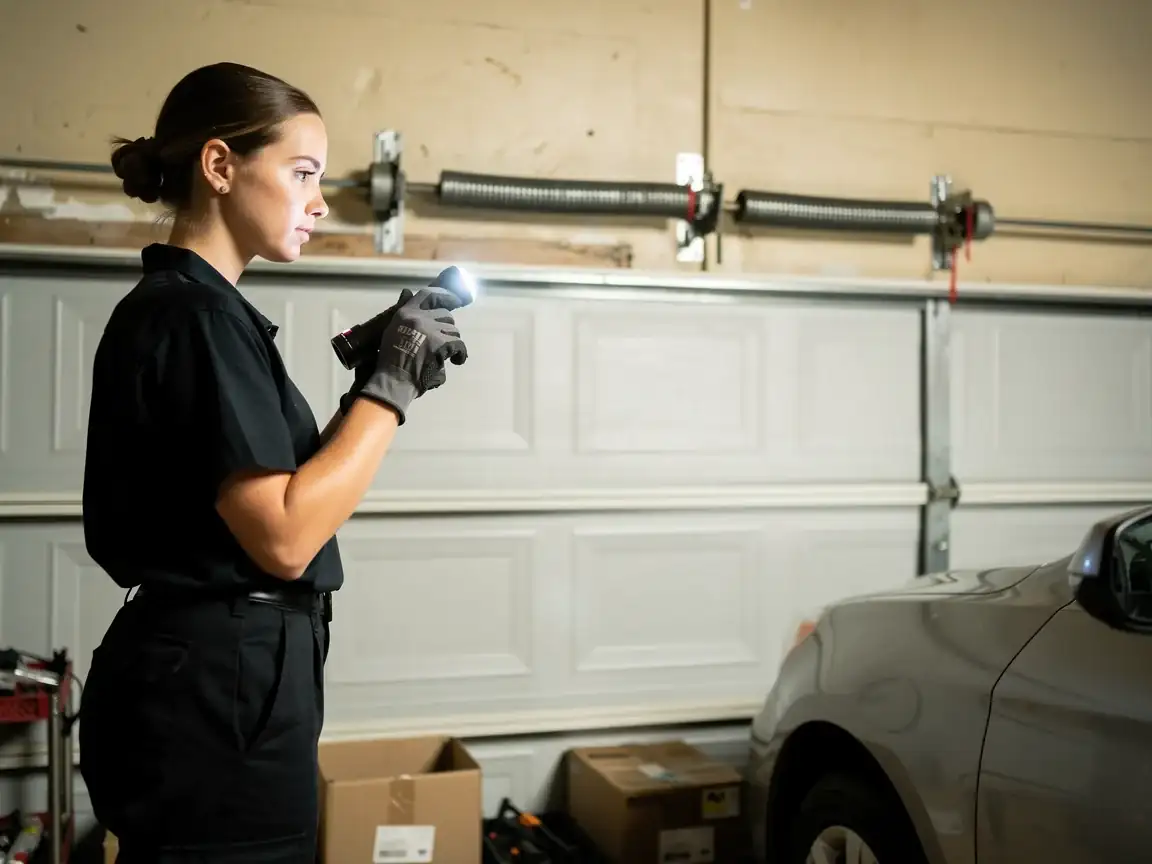
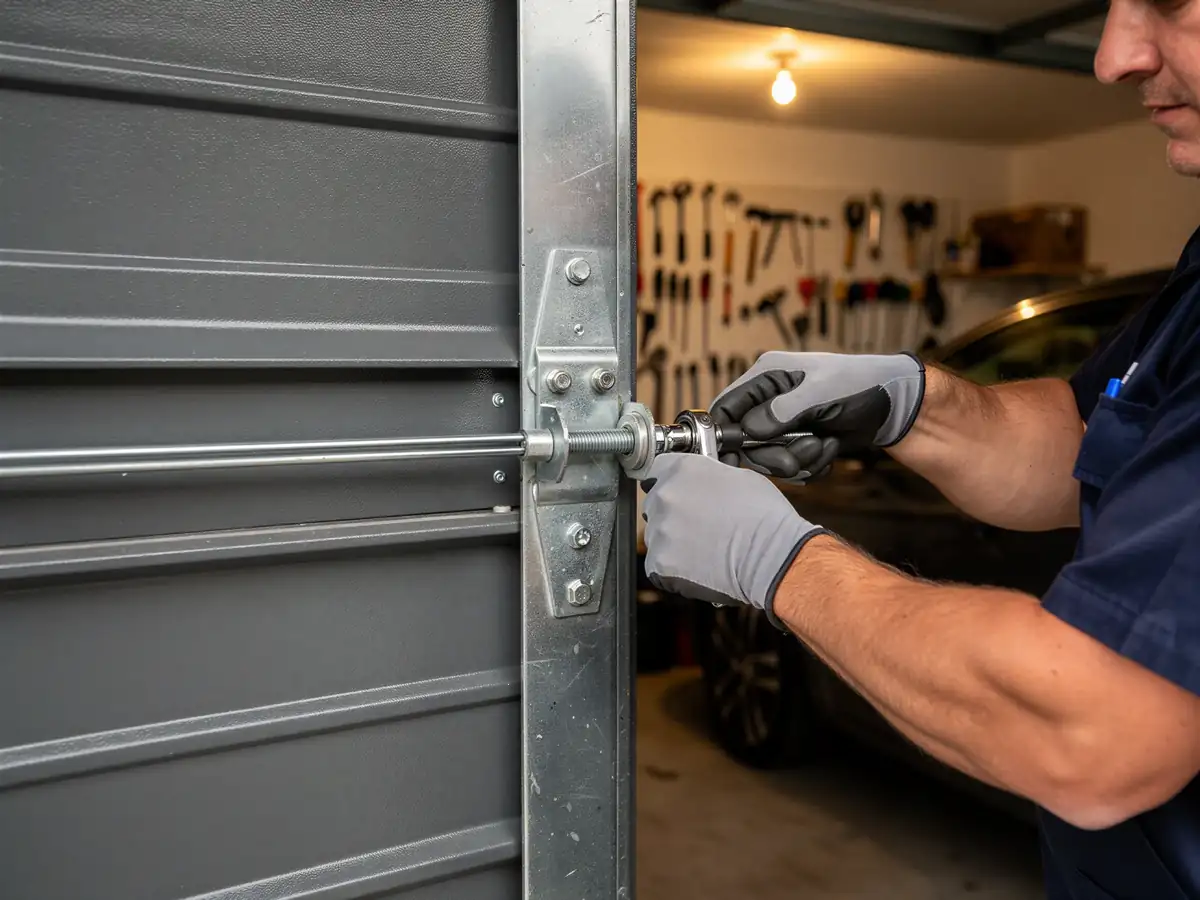
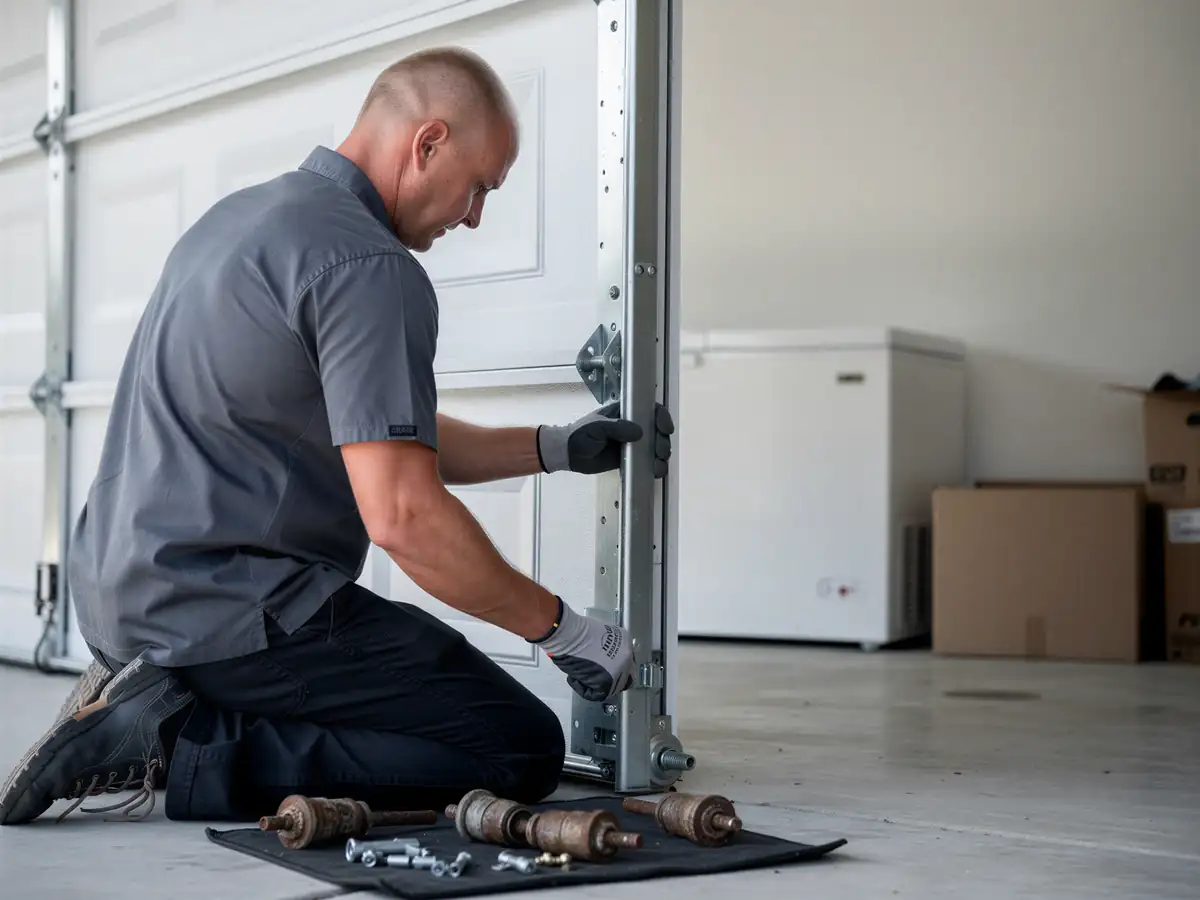
When we show up for a service call, we're not just looking at the symptom you called about. We're looking at what a house from that build window typically has behind the panel: the spring size, the drum type, the cable gauge, the hinge pattern. A call that starts as "the door won't open" in a 1968 house usually ends with us checking three or four things that trace back to original hardware, not just the opener. That's the baseline every service call starts from here, across the 16 named areas we work in.
What It Costs
We don't publish a flat number for a service call here, because what drives the bill is what we find once we're inside the garage, not a standard rate card. On houses from the 1960s and 70s stock common to this area, the spread between "replace a roller" and "replace a spring, cable, and drum together" is wide, and age of the hardware is usually the deciding factor - older torsion setups tend to need more than one part replaced at once because the whole assembly has worn as a unit.
Here's the honest limitation: if your door uses a spring size or bracket pattern that stopped being made years ago, we may need to order the part rather than pull it off the truck, and that adds time to the job. We'd rather tell you that up front than quote you something we can't deliver that day. A median household income of $71,199 across the service area tells us most owners here are weighing a repair against a full replacement, not defaulting to either one, and we price the call so you can make that call with real numbers in front of you, not a guess.
What to Check
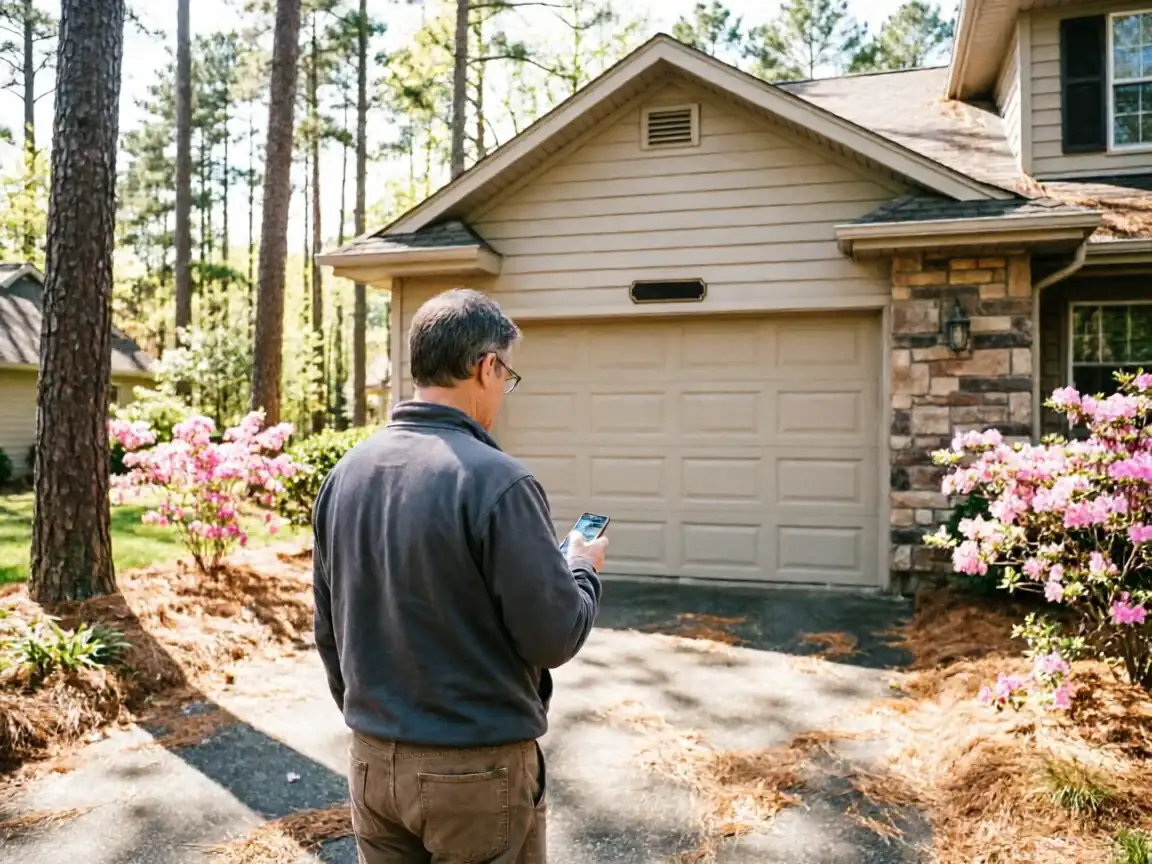
Before you call, there's a handful of things worth looking at yourself
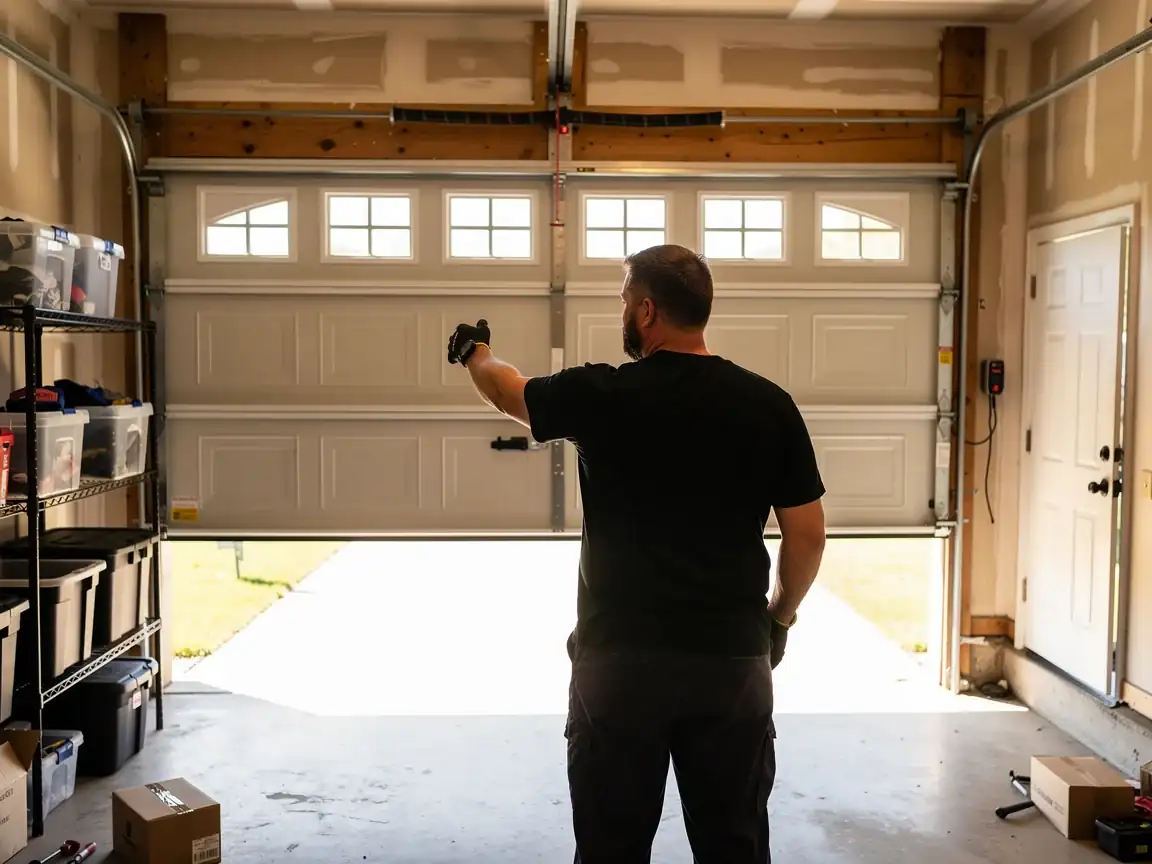
Especially if your house falls in that 1953-2002 build range. Pull the manual release and try to lift the door by hand - if it feels heavy or uneven, that's a balance problem, usually springs, and it's common on original torsion setups that have never been rebalanced. Look at the bottom corners of the door for rust or flaking paint; on older steel panels in this climate, that's often where moisture sits longest.
Check the track for gaps at the rollers, particularly near the top where the door reverses direction
Track alignment drifts over decades, and a door that's run on the same track since the 1970s has had a lot of time to walk out of true. Listen for a grinding or popping sound as the door travels; that's often the opener drive gear, which wears out on its own schedule regardless of the door's age. None of this is a substitute for a service call, but it tells us where to start when we arrive, which saves you diagnostic time on the bill.
How Local Conditions Play In
Roanoke sits in a cold-moderate climate band, and that shapes how garage door hardware fails here more than most owners expect. Steel springs and cables go through repeated freeze-thaw cycles every winter, and on doors that are already thirty or forty years old - common given the median 1976 build year across this area - that cycling accelerates fatigue in metal that was already near the end of its service life. A spring that might last another few years in a milder climate can snap here without much warning.
We cover a service radius built around towns close to Roanoke: Vinton, Cave Spring, and Hollins at about four miles, Salem at five, and Cloverdale at six, with Laymantown, Daleville, Blue Ridge, and Troutville around eight to ten miles out. Montvale, Fincastle, New Castle, Shawsville, Westlake Corner, Rocky Mount, and Moneta round out the farther end of the area, fifteen to twenty miles. The drive time to those outer towns can affect how quickly we can get to a same-day call, so when you reach out, telling us roughly where you are helps us tell you honestly when we can be there.