The Situation
Most of the calls we get about a door jumping its track trace back to the house itself. Housing in this service area went up mostly between 1953 and 2002, with the median build year sitting around 1976, and the bulk of it across our sixteen named neighborhoods is 1960s and 70s construction. That matters because the track hardware from that era was sized and mounted differently than what gets installed now. Steel track gauges from a 1968 build don't match what's on the shelf at a supply house today, and the lag bolts holding that track to the jamb have had fifty-plus years to work themselves loose in wood framing that's shrunk and shifted.
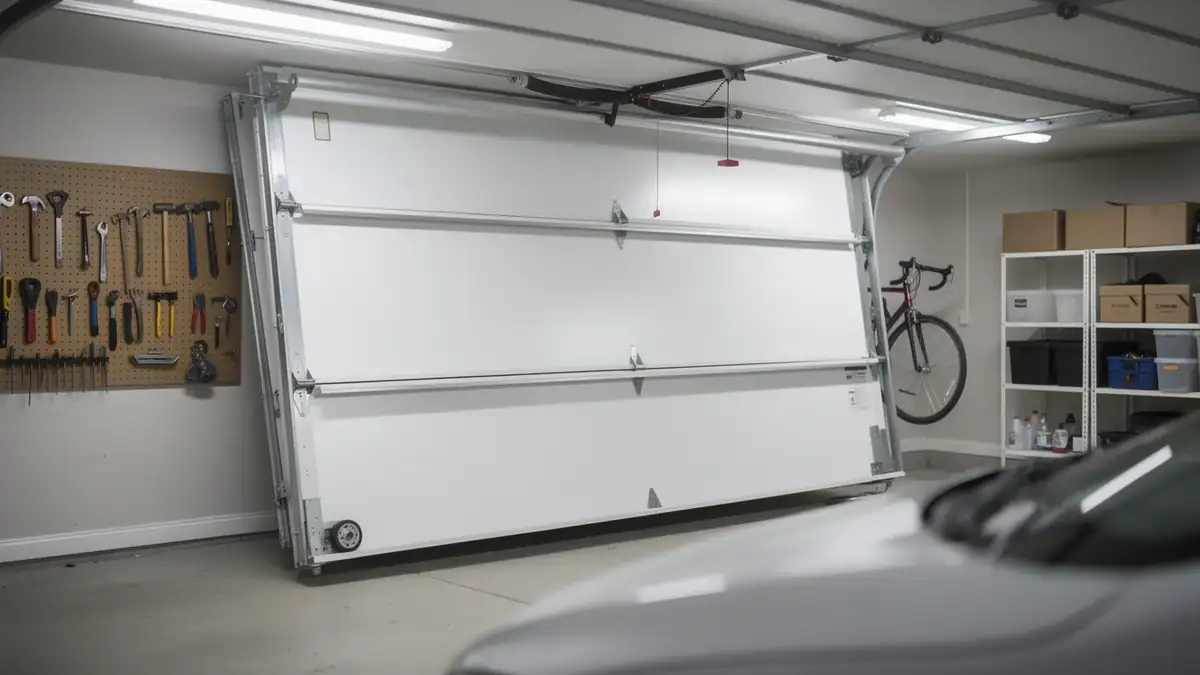
An off-track door usually isn't one dramatic event. It's a roller that's worn its groove wider than the track rail, or a bracket that's bent a few degrees from a car bumper tap years ago, slowly letting the door walk sideways every time it cycles. On the older stock we see most, the track is often original, and original track on a house pushing fifty or sixty years old is track that's seen a lot of seasons.
What It Costs
We're not going to put a number here that doesn't hold up once we're standing in your garage. Cost on an off-track repair depends on whether the track itself is bent (replace a section, or the whole run) or whether it's a roller, hinge, or cable problem that just needs the door reseated and adjusted. On the older torsion setups common to the 1960s-70s builds around here, matching hardware sometimes means swapping more of the run than you'd expect, because the original gauge isn't stocked everywhere anymore.
Honest limitation: we don't quote an off-track repair over the phone. We've been burned by "it's just off track" calls that turn out to be a cracked panel bracket or a spring that let go and pulled the cable loose, and giving you a number before we see it does you no favors. What we can tell you is that a door that's simply slipped a roller is a fast fix, and a door with a bent track section on fifty-year-old hardware takes longer because the part isn't a same-day pickup.
What to Check
Before you call anyone, look at a few things
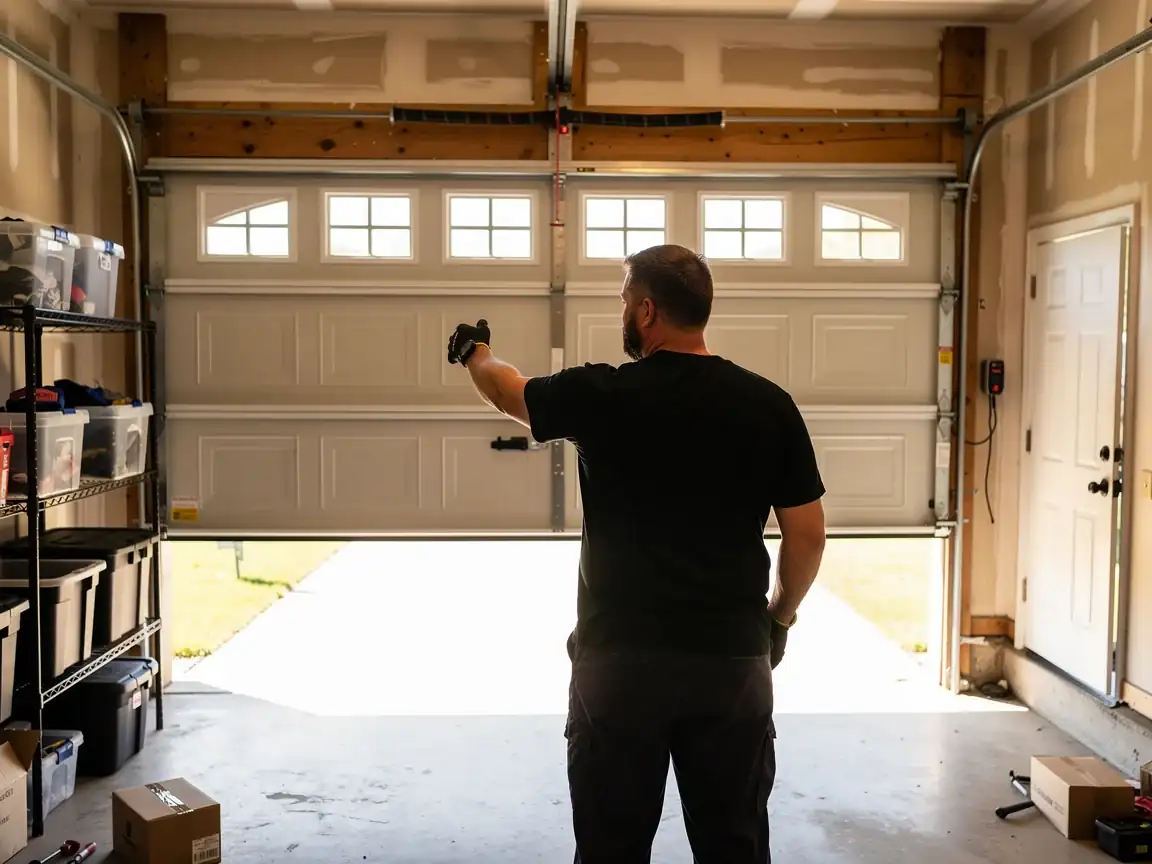
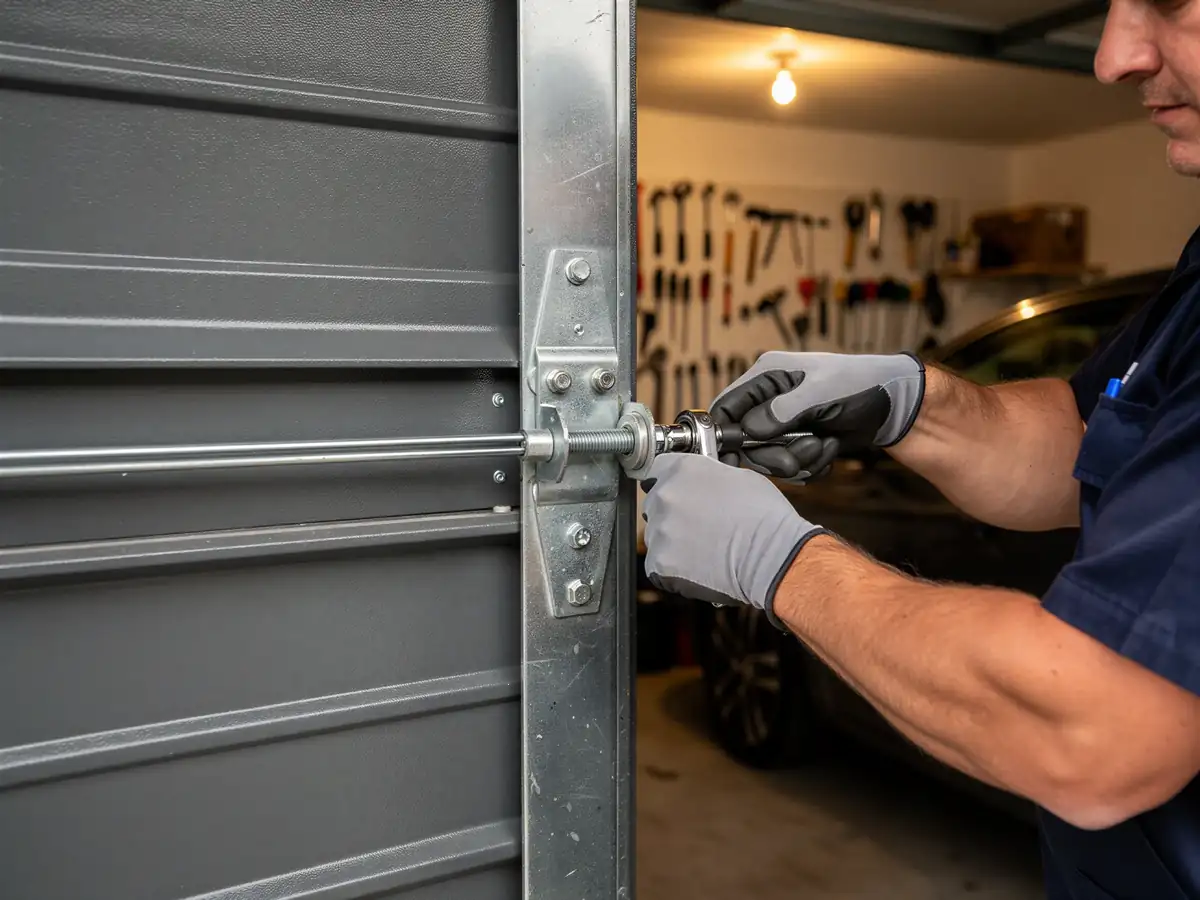
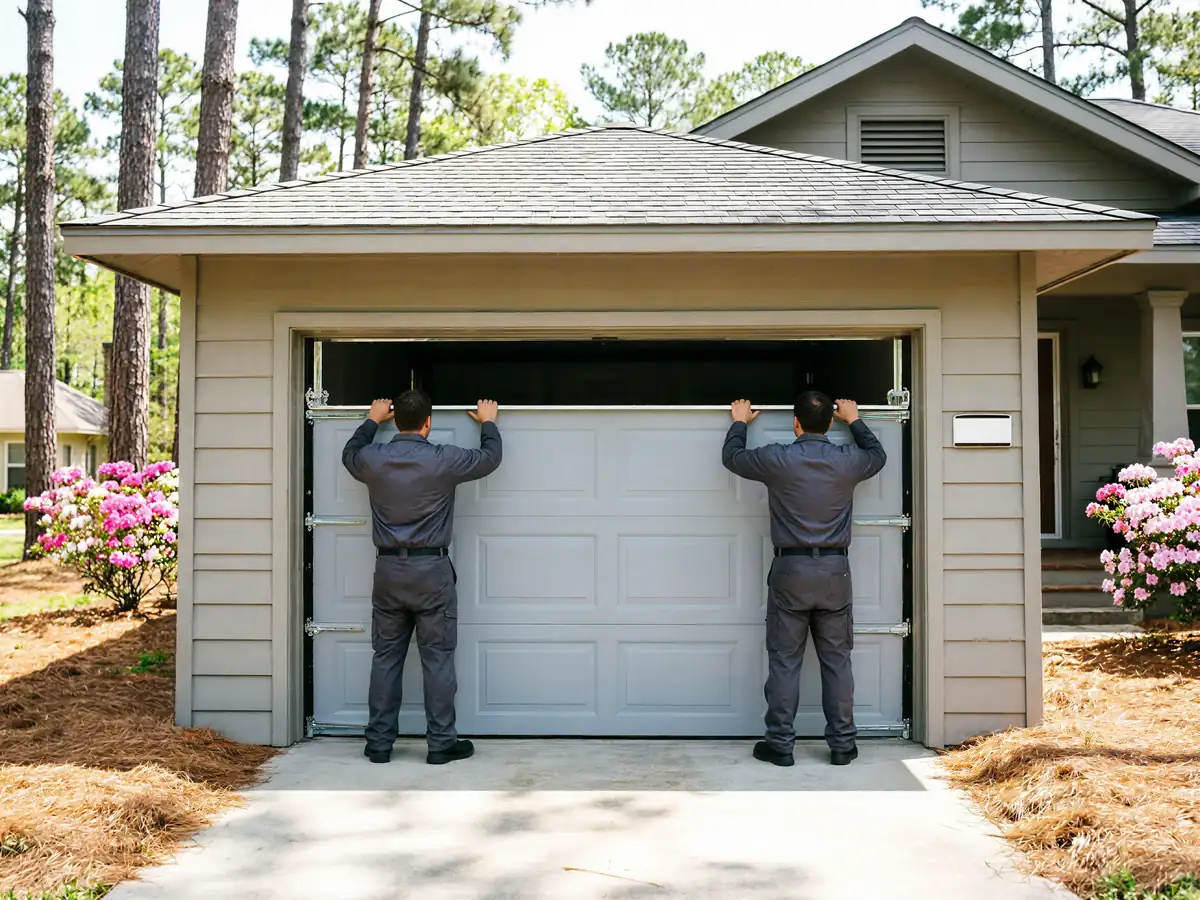
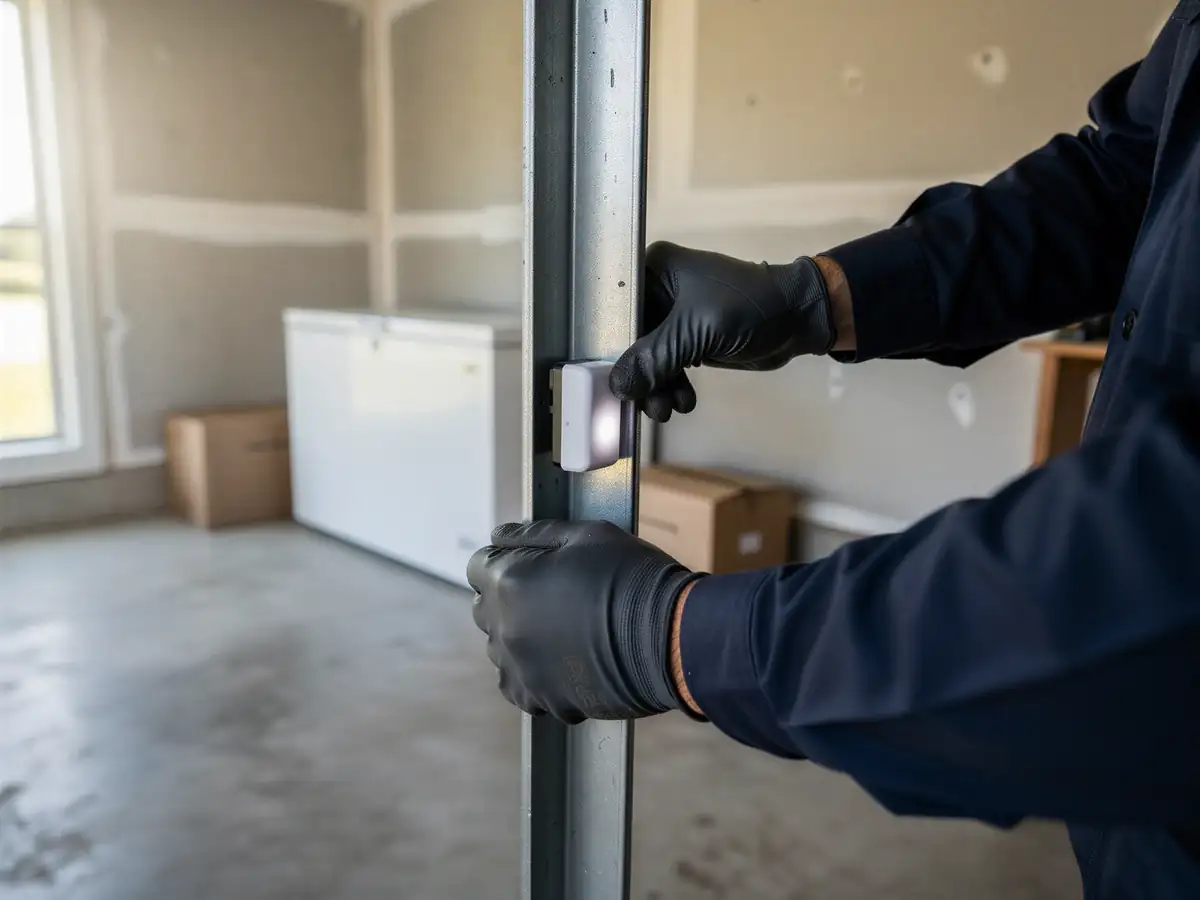
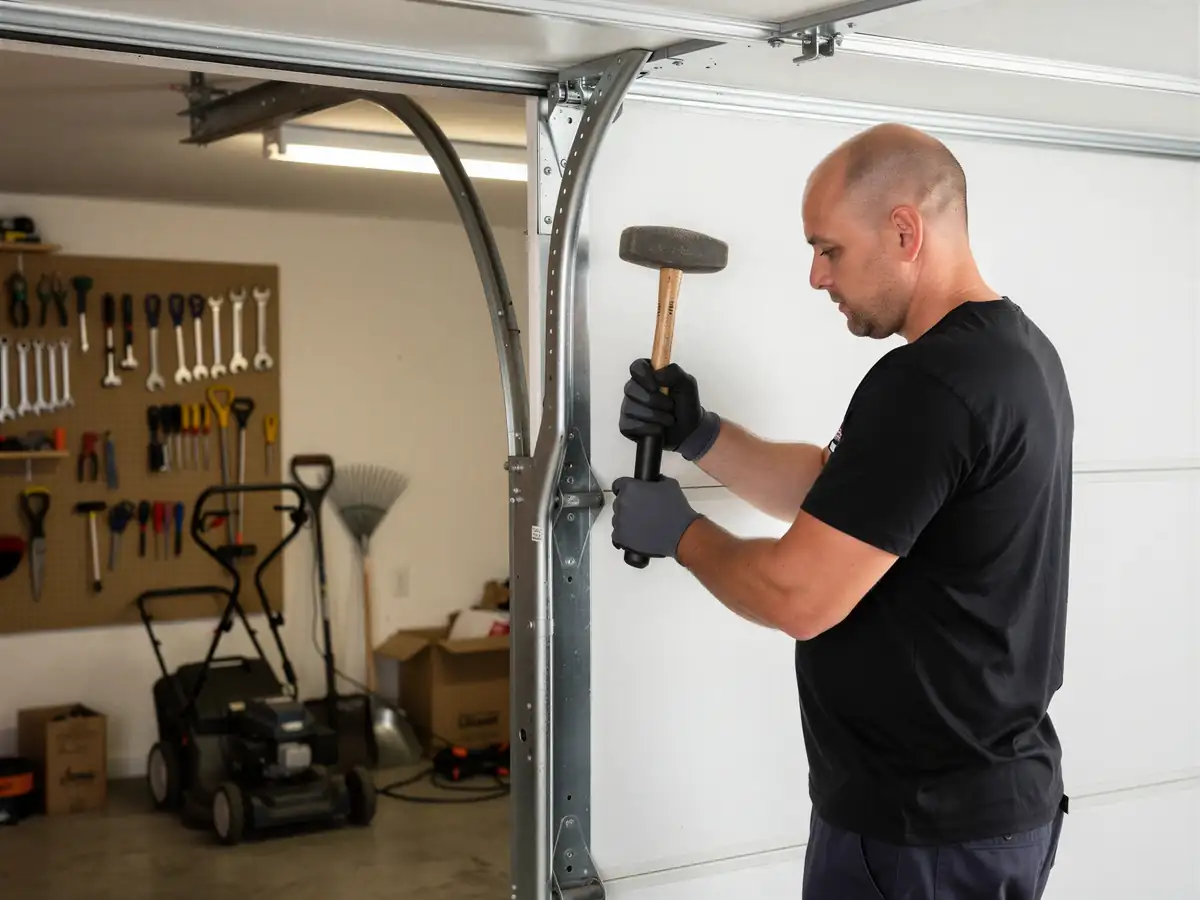
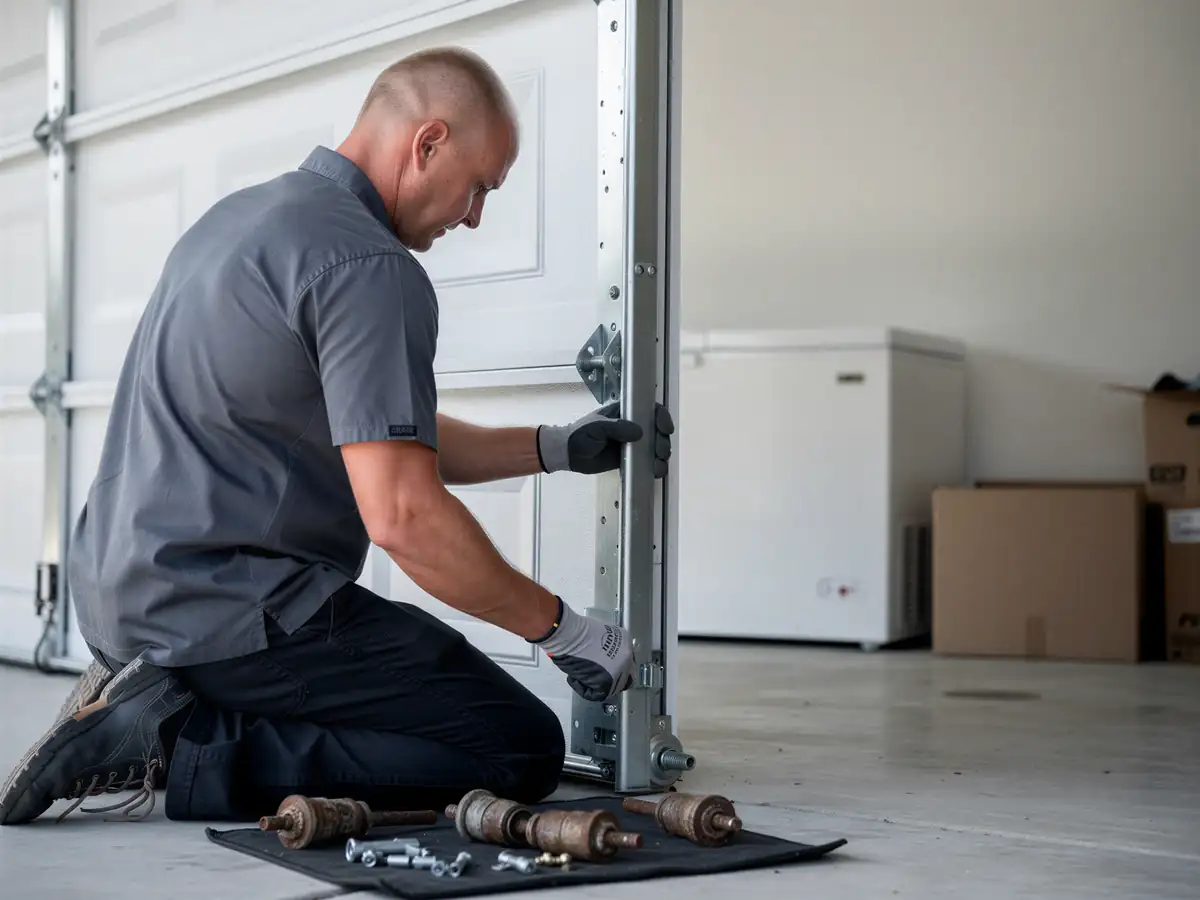
Stand outside the garage and sight down the vertical track on each side - if one side bows out from the wall more than the other, that's your answer. Check the rollers where they ride in the track; a roller that's worn oval instead of round, or one that's cracked, will let the door wander even if the track is straight.
Look at the gap between the bottom panel and the track at the bottom corners
If the door looks like it's riding closer to the track on one side, something upstream has shifted - usually a bent hinge or a bracket with loose lags. Don't force the door by hand past the point where it's catching. On torsion systems especially, a door that's jumped the track can still have spring tension loaded on it, and that's not a DIY fix. If you see a cable hanging slack or wound wrong on the drum, stop and call - that's a sign the track issue has a spring problem behind it.
How Local Conditions Play In
Roanoke sits in a cold-moderate climate band, and that swing between summer heat and winter freeze does real work on garage hardware over the decades. Track brackets bolted into wood framing expand and contract with the temperature, and on houses built in the 1960s and 70s, that cycle has run thousands of times. Lag bolts back out a fraction at a time, and a bracket that's even slightly loose lets the track flex every time the door opens, which is how a straight track slowly becomes a bowed one.
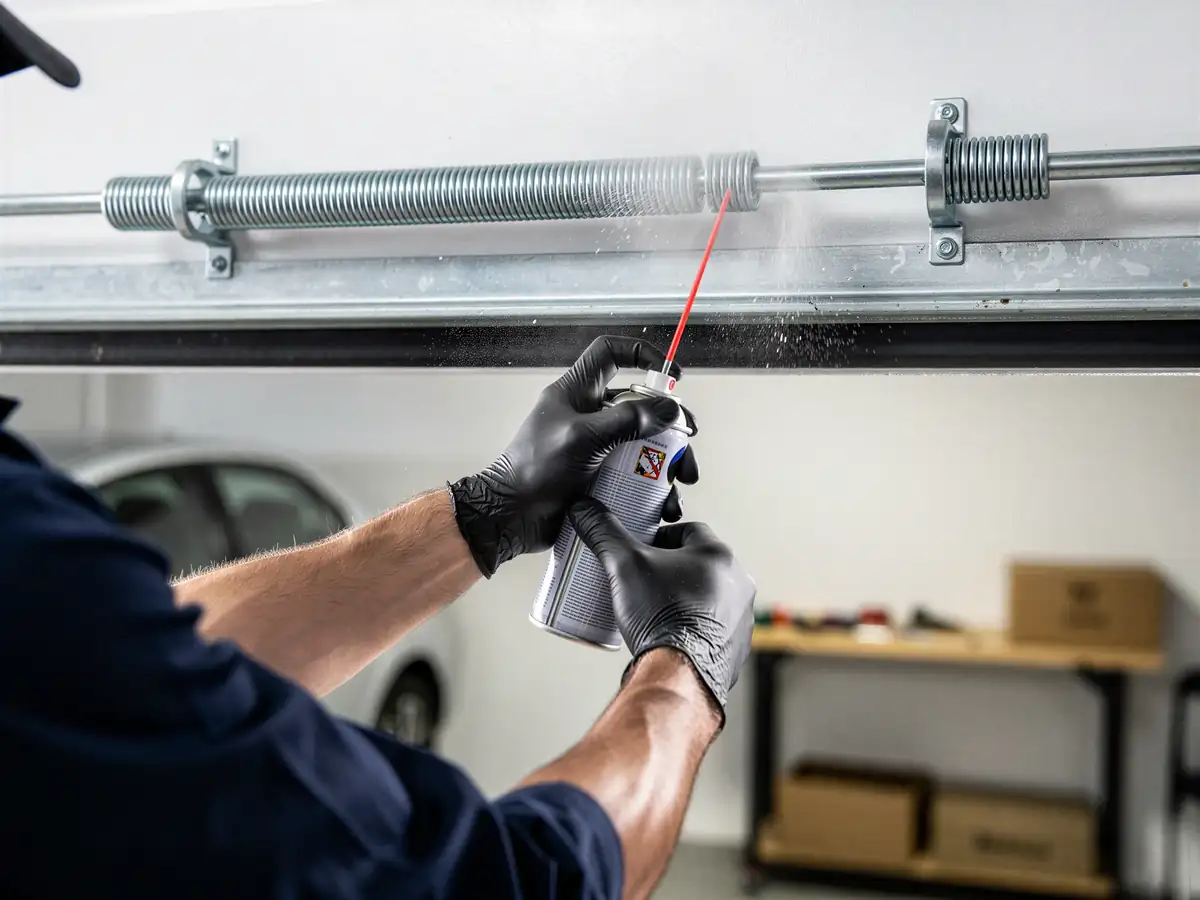
Cold snaps also stiffen the grease in old rollers and make steel more brittle, so a roller that was marginal in August can crack in January. None of this is dramatic weather - it's the ordinary freeze-thaw rhythm this area gets every winter, acting on hardware that in a lot of these neighborhoods has never been replaced since the house was built.