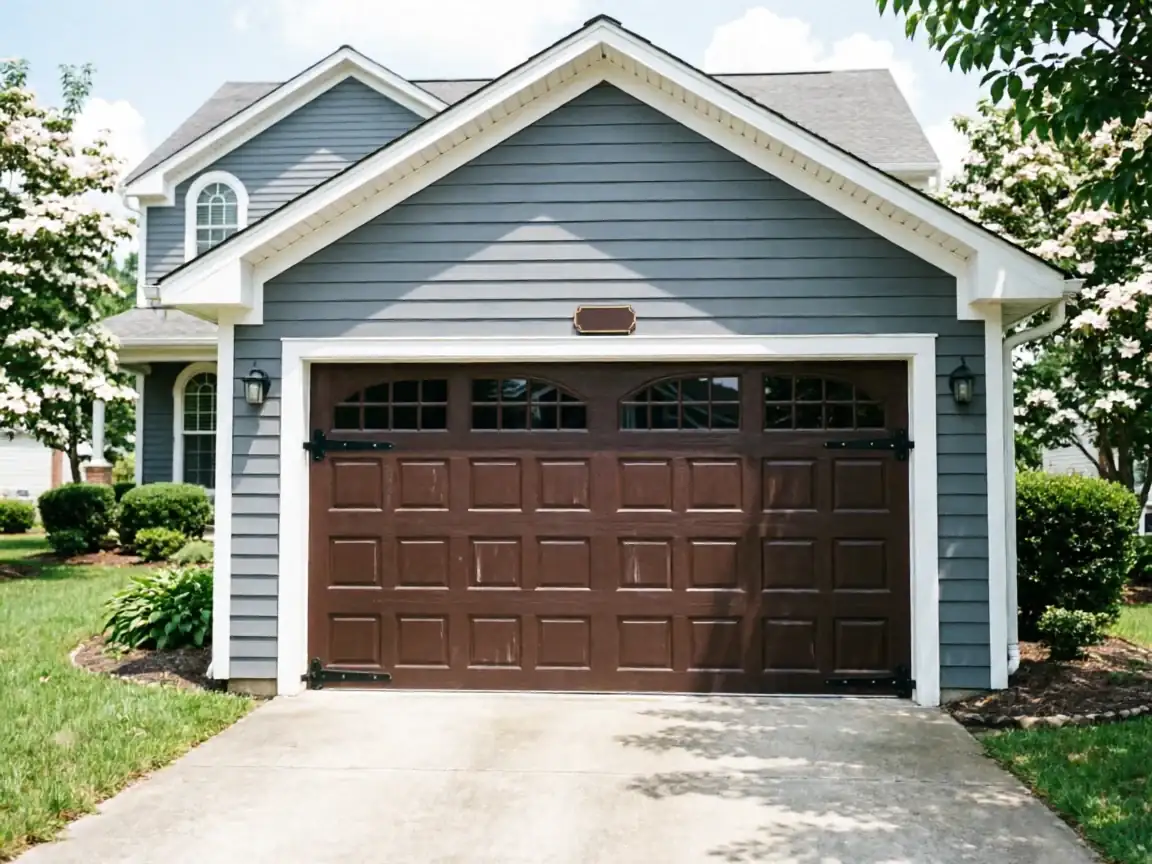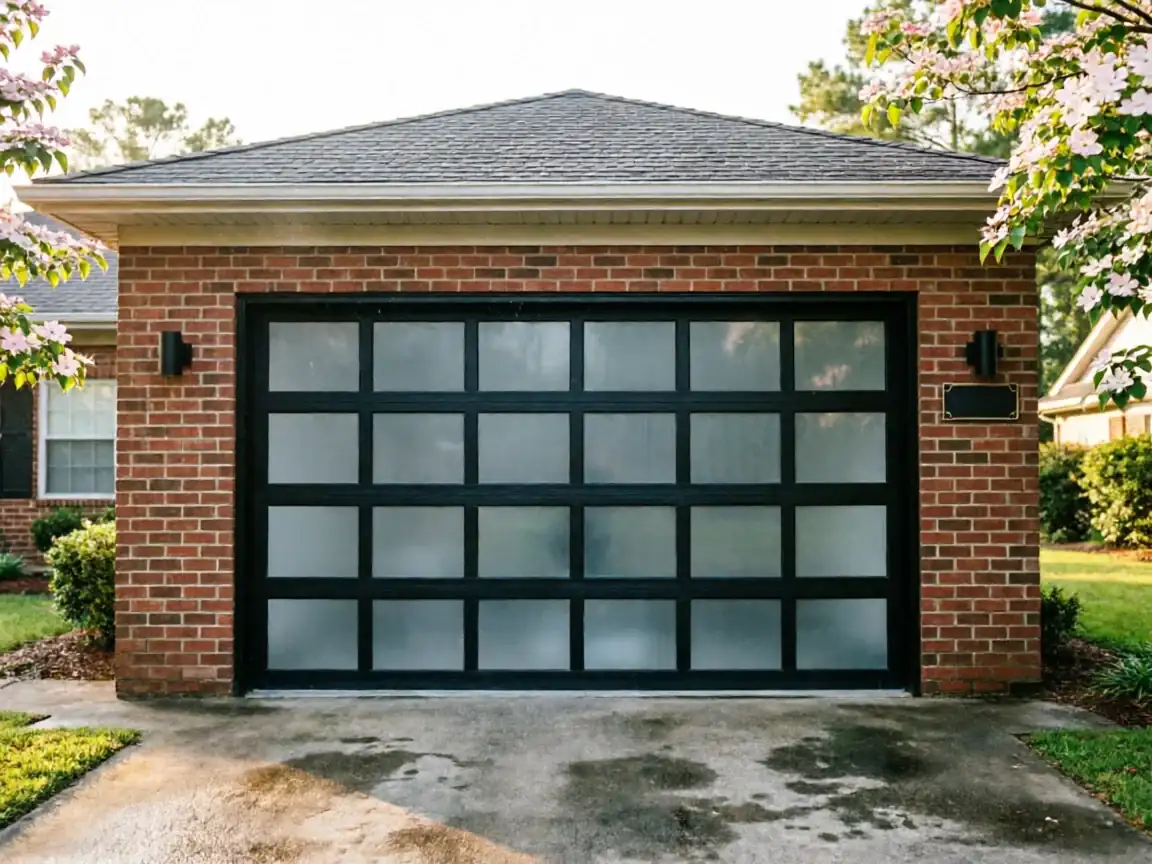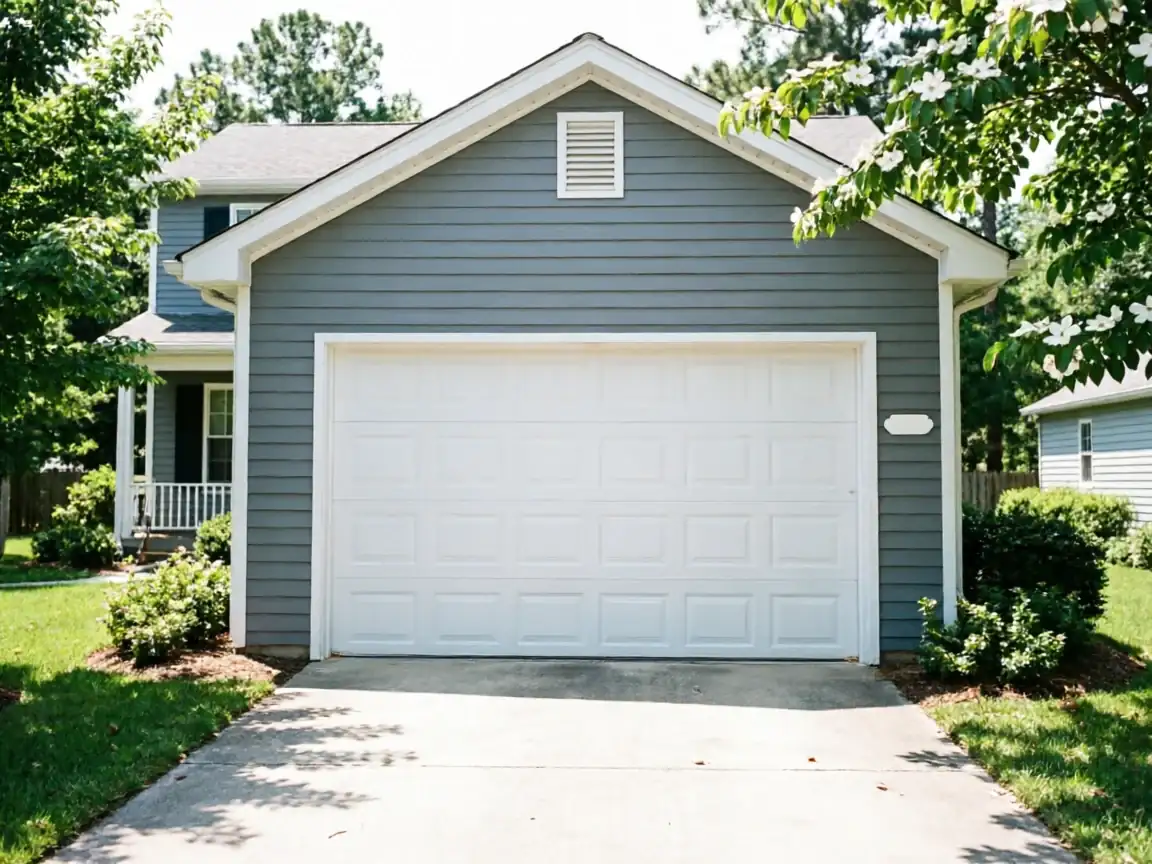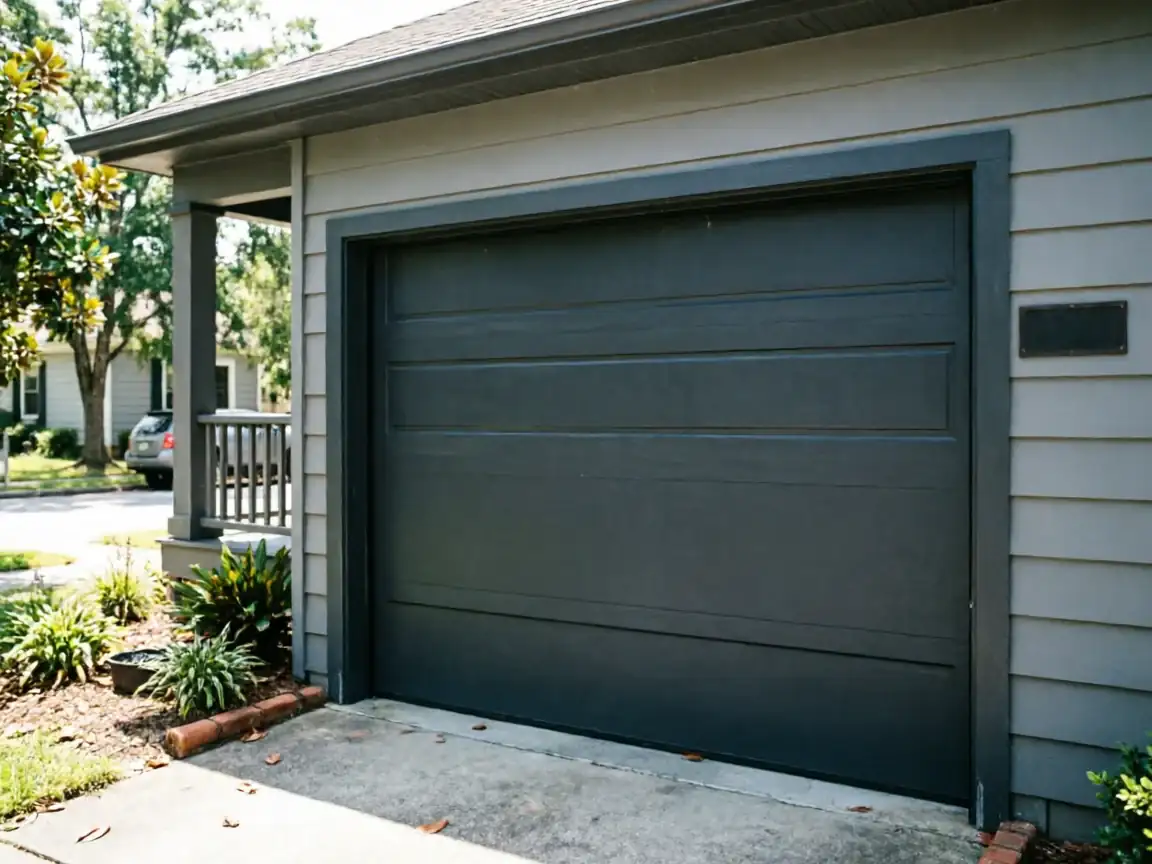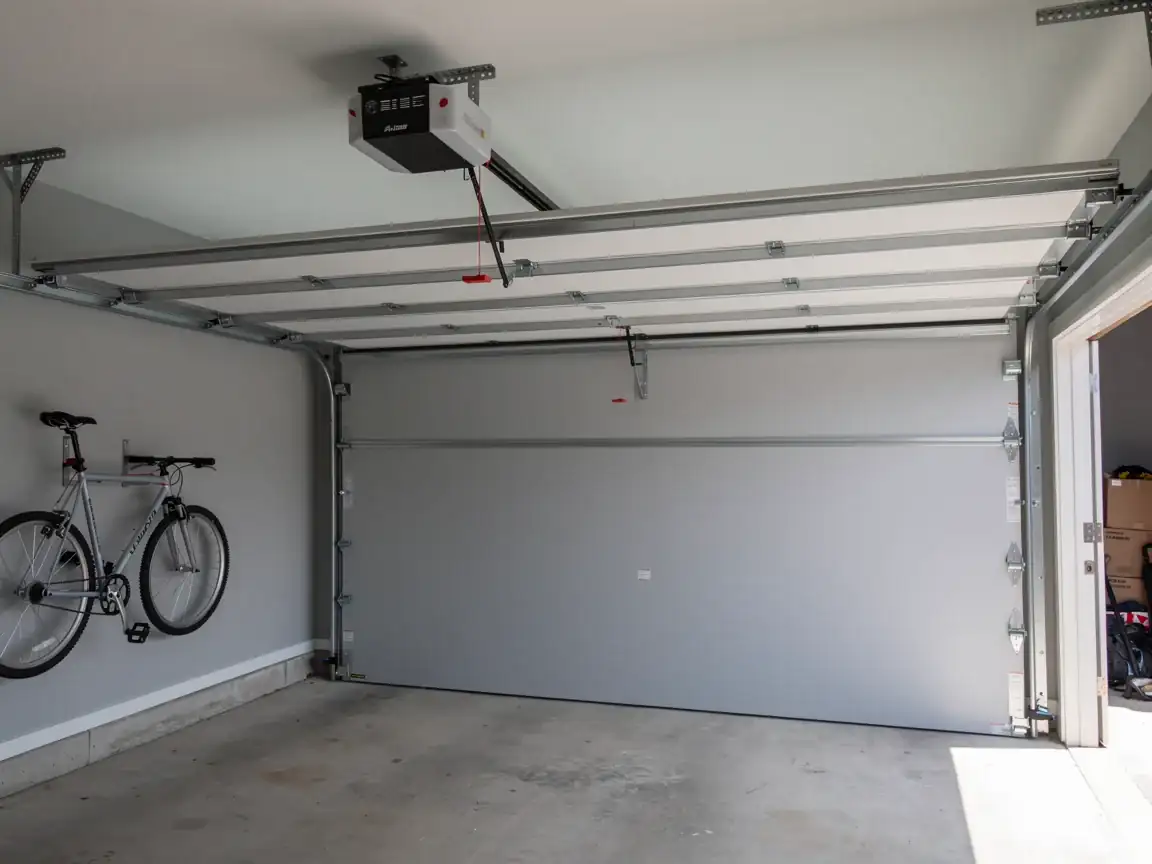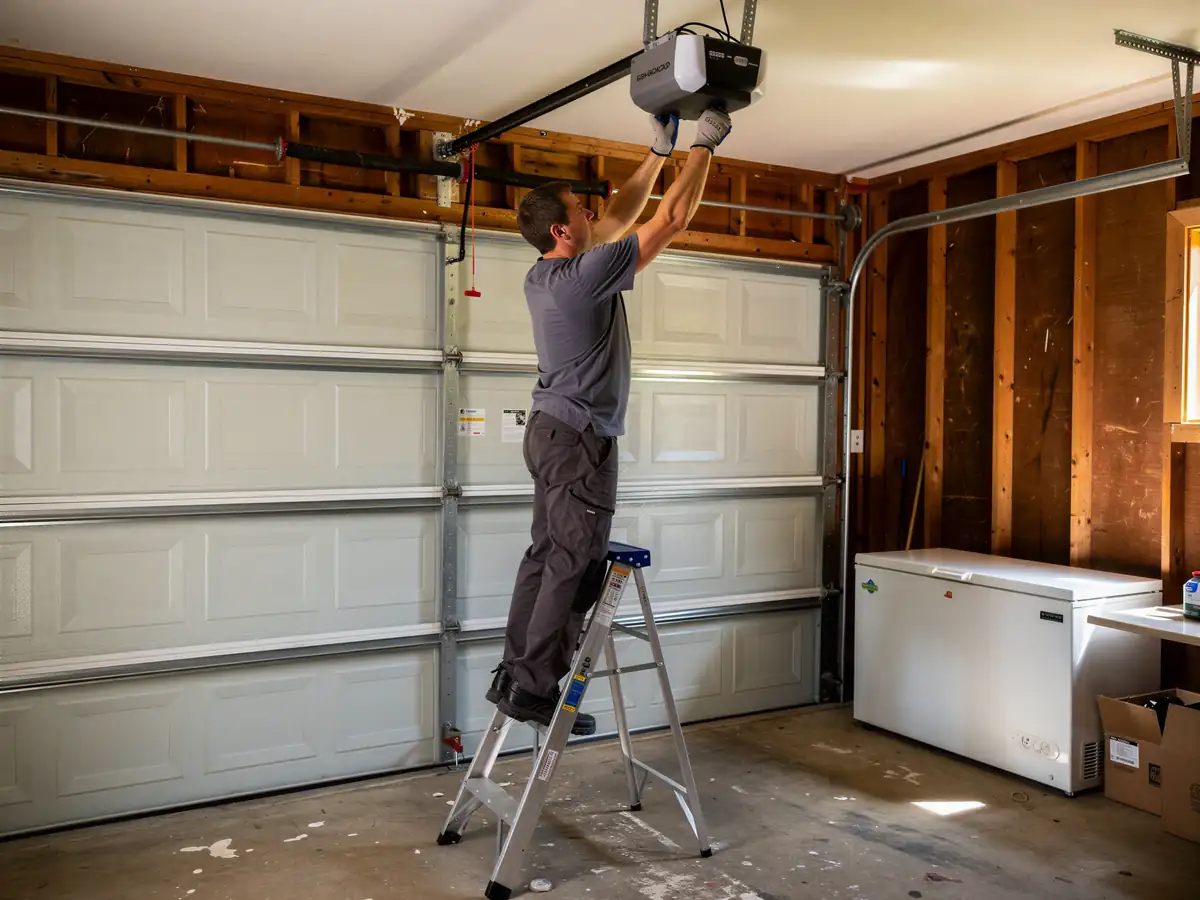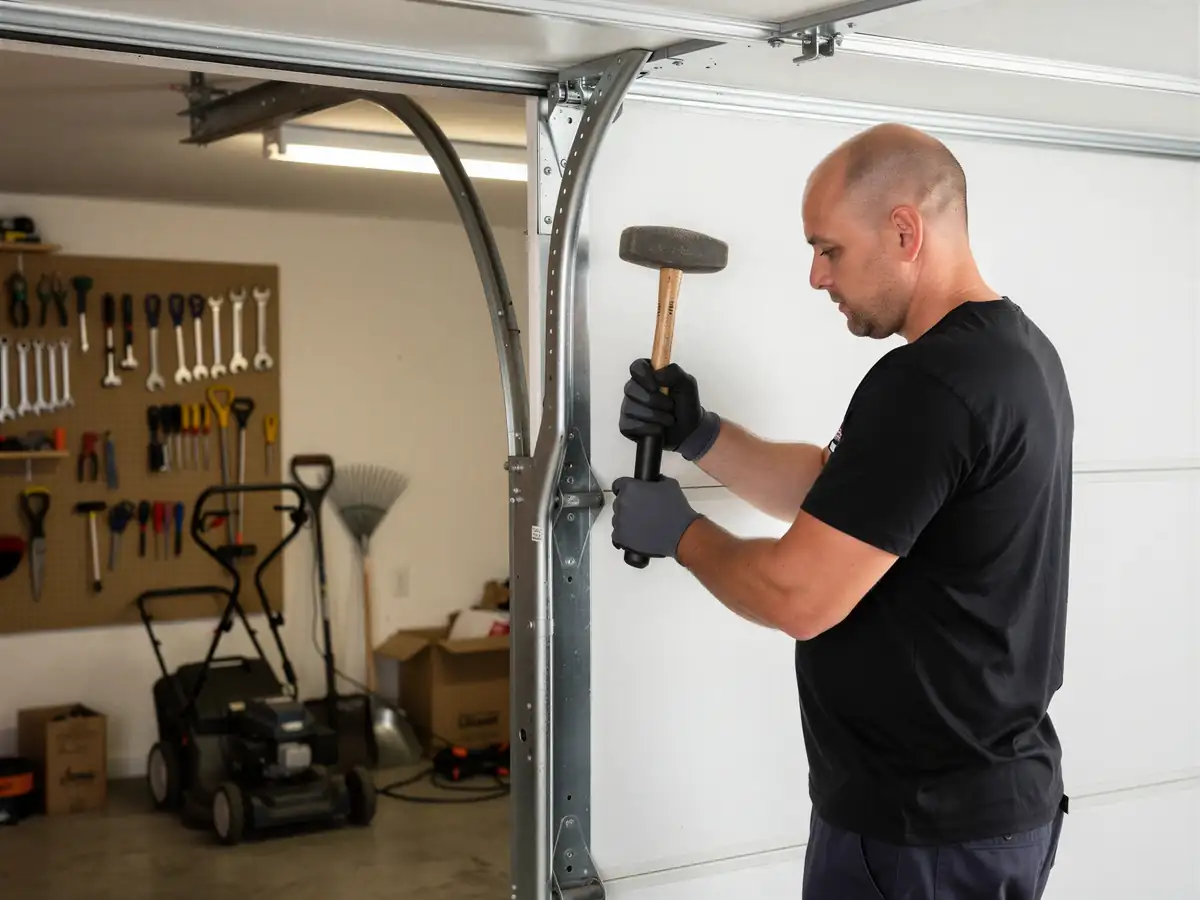
What You Are Seeing
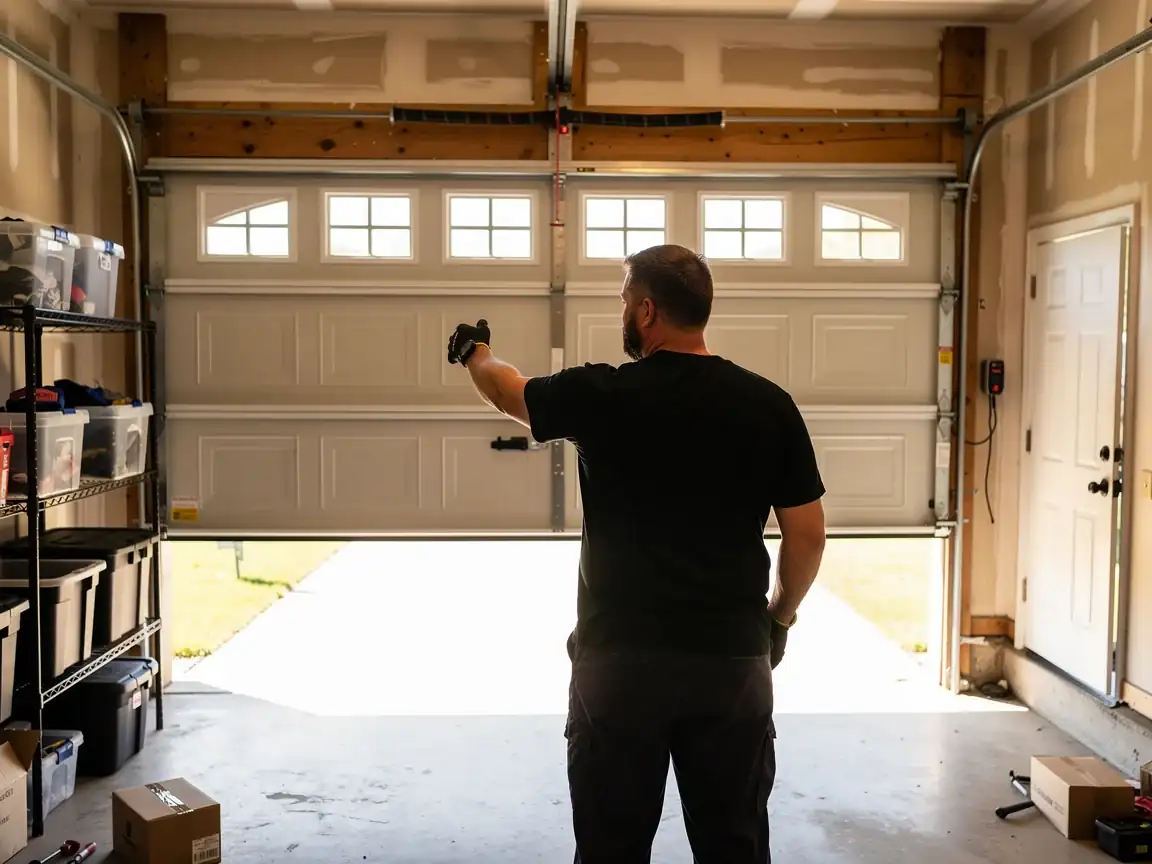
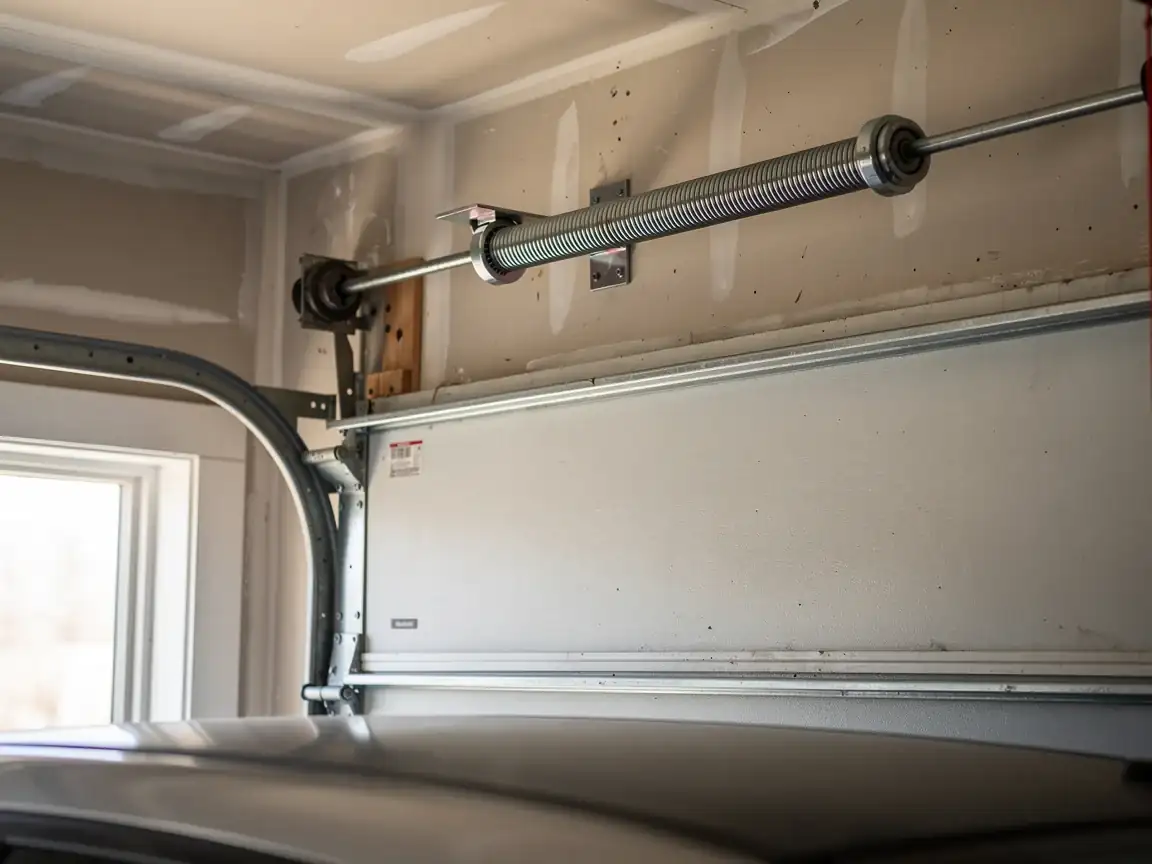
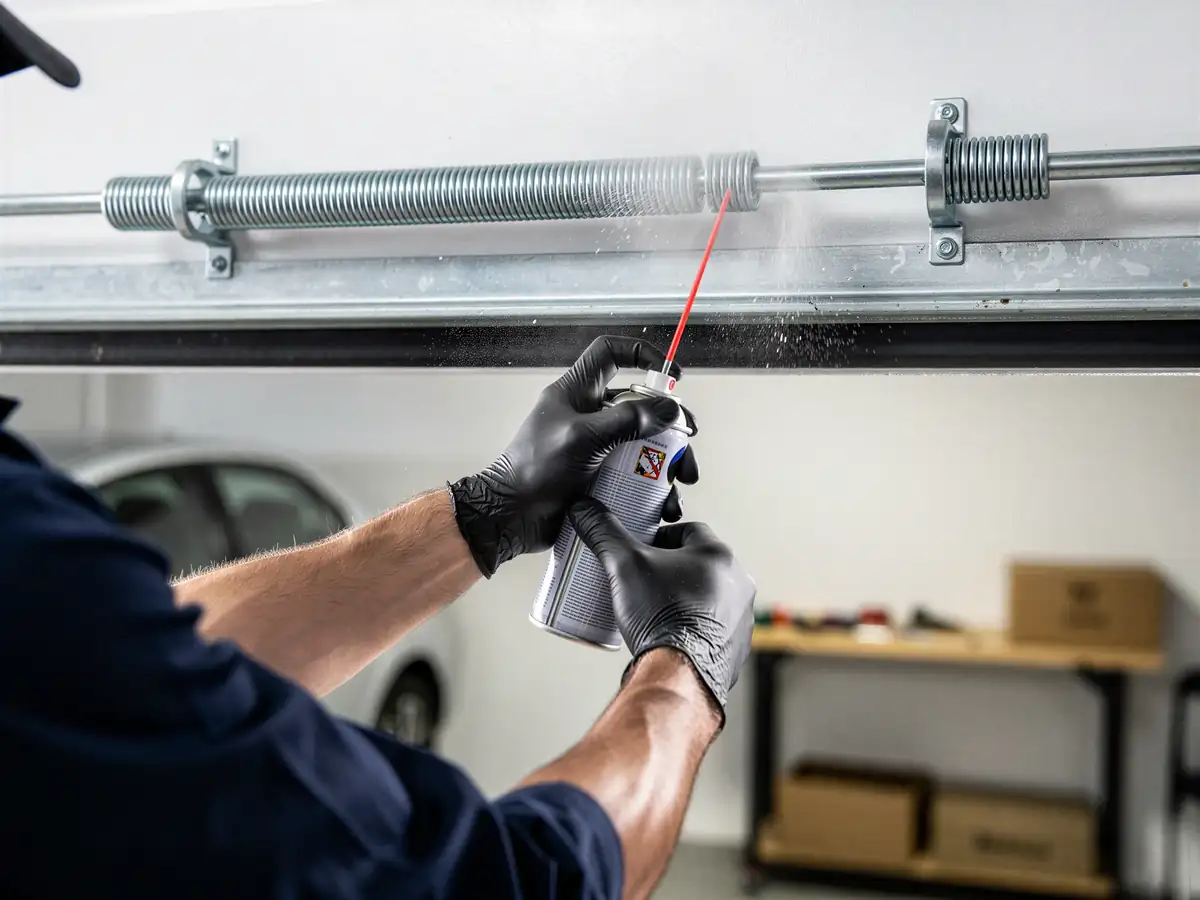
If you're looking at a new garage door for a Roanoke house, odds are the old one is doing one of a few things: the panels are racked out of square, the torsion spring has lost tension and the door drops fast once it's past waist height, or the track has pulled away from the jamb because the original hardware was never upgraded. A lot of Roanoke housing went up between 1953 and 2002, with the median build year landing around 1976. That means a big share of doors in this area are original or first-replacement units running on torsion hardware that was standard for a mid-70s build - lighter springs, single-point cable drums, and tracks sized for a steel door half the weight of what's sold today. When that gear finally gives out, the fix usually isn't a spring swap. The jamb, the header, and the opener bracket were all built around the old door's dimensions, and a straight replacement often means rebuilding the mounting points to take a modern insulated panel. That's the job we're usually called out for, not a tune-up.
What It Costs
We don't publish a flat number here, because the two houses that look alike on the street can need different work. A double-wide opening on original 1970s track with a sound jamb is a different job than the same opening where the header has sagged and the side room for the spring assembly has shrunk. What does move the number: door size, insulation level, whether the opener gets replaced alongside the door, and whether the existing jamb and track need rebuilding versus reuse. We'll give you a firm number after we look at the opening in person - not over the phone, not from a photo. That's a limitation worth saying plainly: we don't quote installs sight-unseen, because on a lot of the older stock in this area the real cost driver is hidden behind the trim, not visible from the driveway.
The Complications
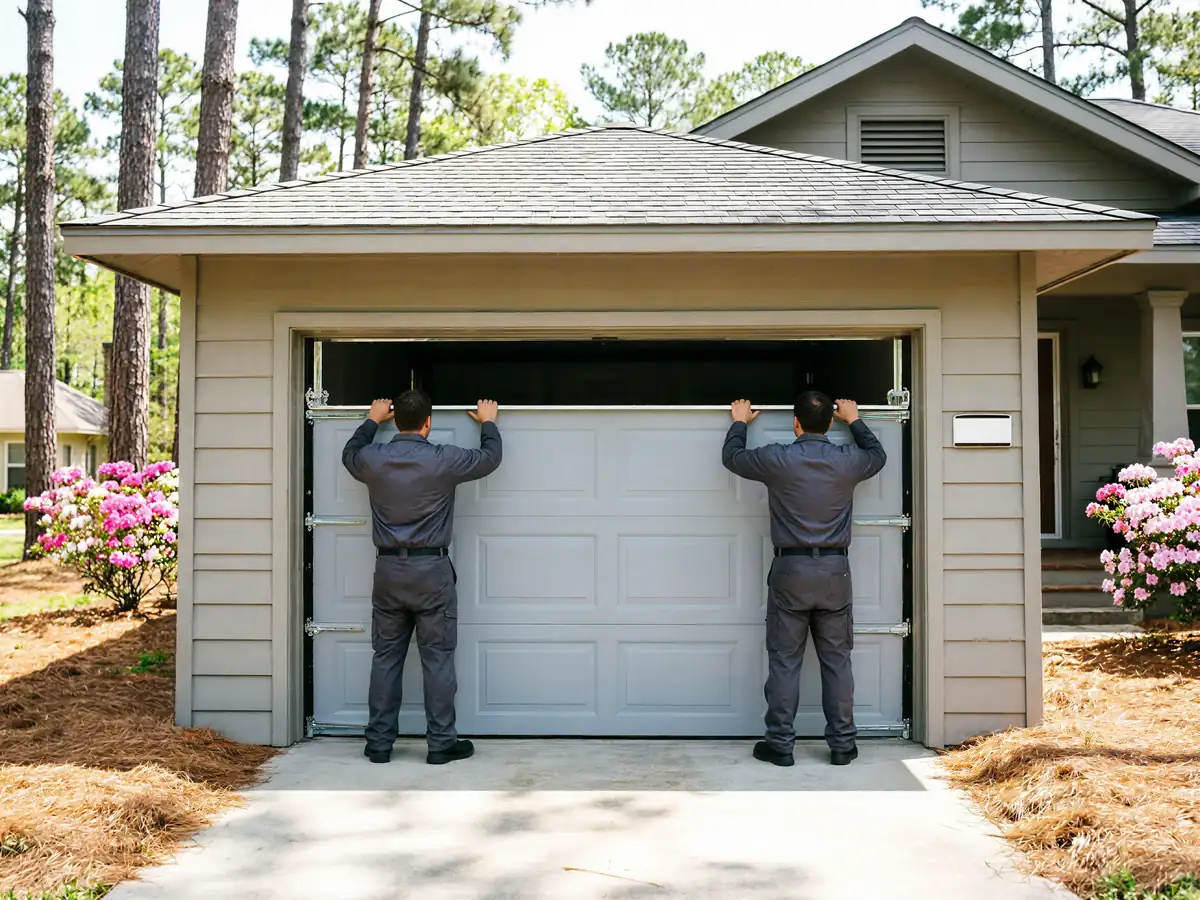
The complication we run into most is the jamb-and-header question: can the existing framing take a new door's weight and track geometry, or does it need rebuilding first. On a lot of the 1960s-70s stock in this area, the header was sized for a lighter door than what's commonly installed today, especially if you're moving to an insulated steel or composite panel. We check that before we quote anything. The other complication is access - some of these builds have side room for the spring assembly that's tighter than current double-door hardware wants, which can mean a torsion shaft relocation rather than a straight swap. None of this is unusual for houses from this era, but it does mean the install can take longer than the door itself would suggest. We'd rather tell you that upfront than have you budget for a four-hour job that turns into a two-day one.