How Long It Takes
A straight roller swap on a double door runs through a set routine: pull the old rollers out of the track one at a time, work the new ones in, check the track alignment, and run the door a few cycles to make sure nothing binds. We're coming from Roanoke, about 4 miles out, so travel isn't the variable here - the door itself is. Houses in Hollins skew toward the newer end of the area's stock, with a median build year around 1976, so a lot of the doors we open up still have factory steel rollers on steel track rather than the older nylon-on-worn-track setups you find in some of the 1960s neighborhoods closer in. That usually means less time spent re-aligning a track that's drifted out of square, and more of the job spent just on the rollers themselves. We won't quote a fixed number of hours here, because a bent track or a seized hinge changes the math, but a clean roller-only job is one of the shorter calls we make.
Stocked Parts
We carry the common sizes - 2-inch and 7-inch stem rollers in both nylon and steel - on the truck, because they fit the bulk of doors built across this service area's housing stock from the 1960s through the early 2000s. Hollins houses, sitting at a median year of 1976, usually take these standard sizes without a special order. Where we do run into trouble is older or oddball track profiles, which show up more often in the pre-1960s pockets elsewhere in the service area than they do here. If your door has a non-standard roller stem or a track width outside the usual range, that part may need to be ordered, and we'll tell you that up front rather than make you wait on the truck for something we don't carry.
The Complications
A roller job turns into a bigger job when the track itself is bent, when the roller has been seized long enough that it's chewed up the track rail, or when the door is old enough that the roller stems don't match anything we stock. None of those are common on a 1976-median-year house, but they're not rare either - 1976 is close to fifty years old now, and original hardware on an original door is getting to the point where parts matter more than labor. Here's the honest limit: if your door is at or near that age and the rollers are only the first thing failing, we'll tell you if a full door replacement makes more financial sense than patching one system at a time. We don't push replacement to pad a ticket, but we also won't sell you a $40 roller fix on a door that's going to need the springs, the opener, and the panels within the year.
How We Fix It
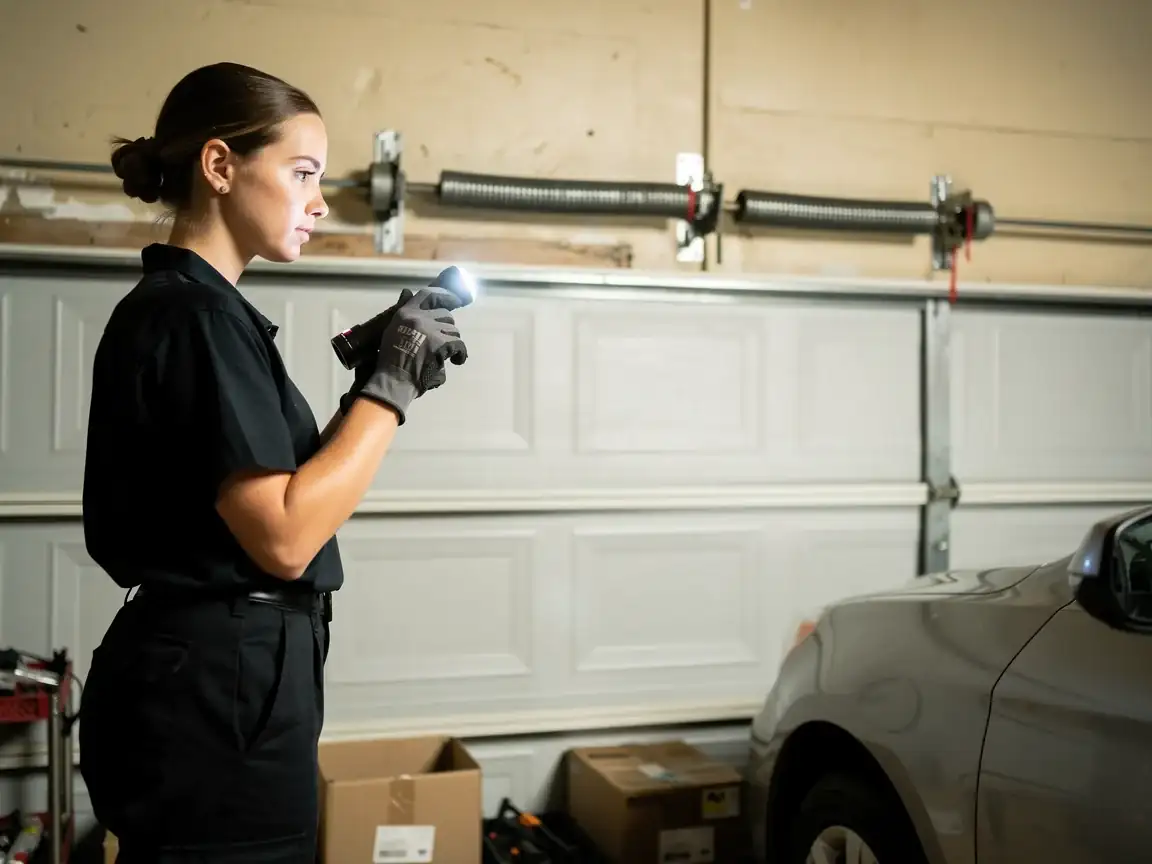
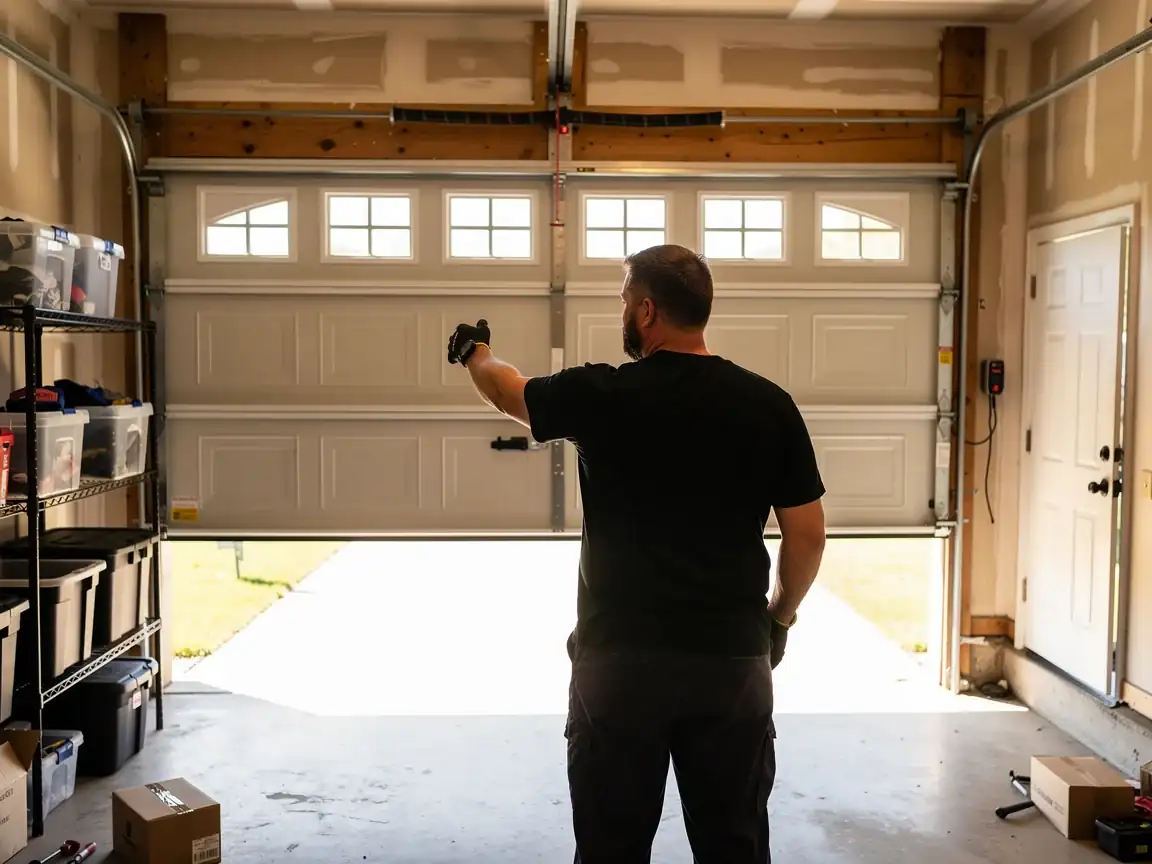
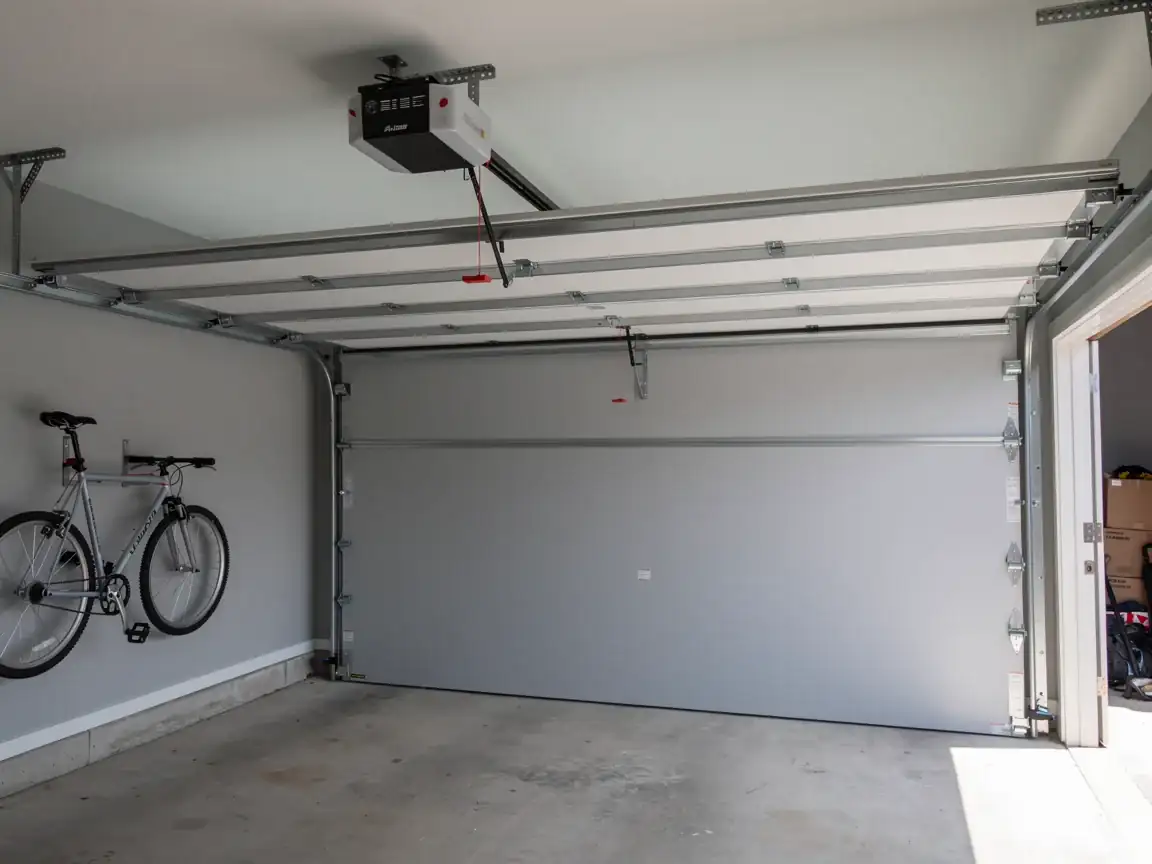
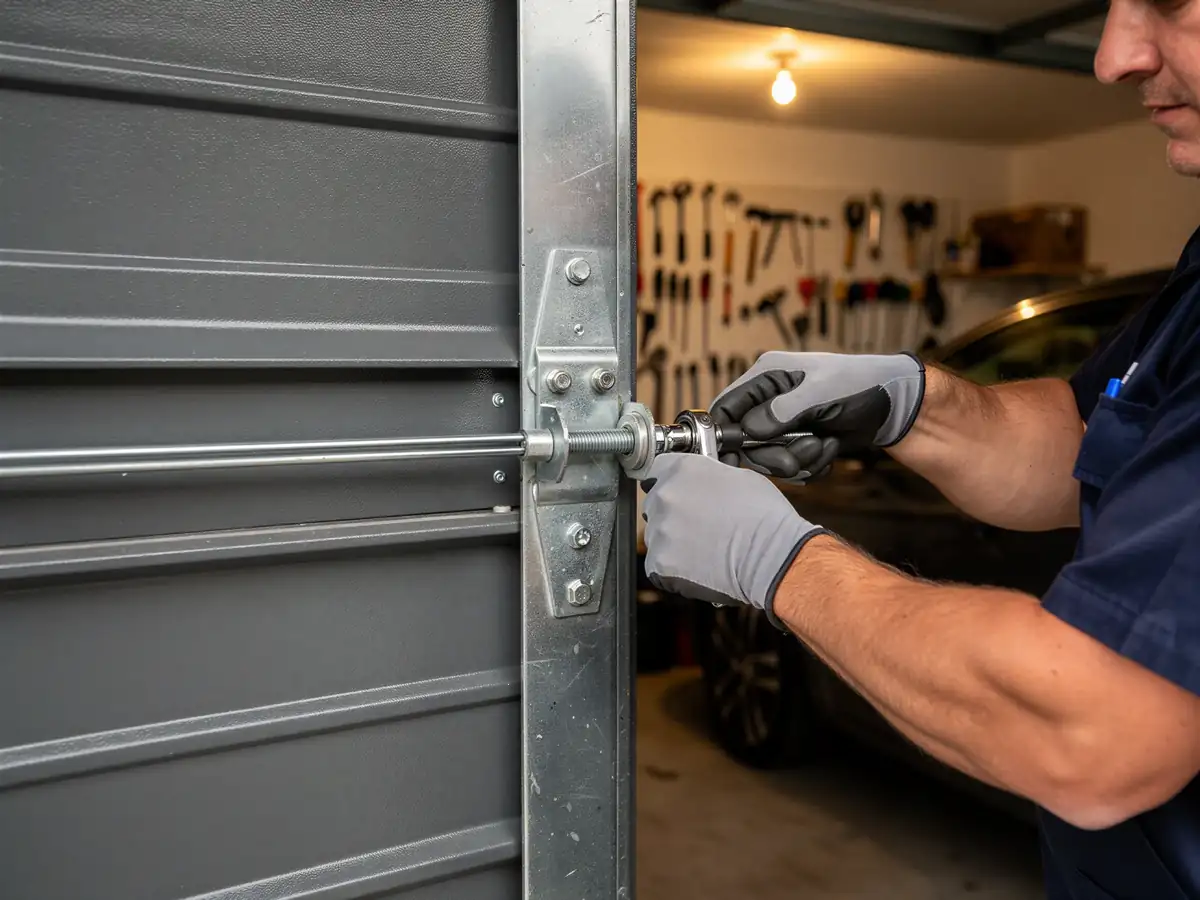
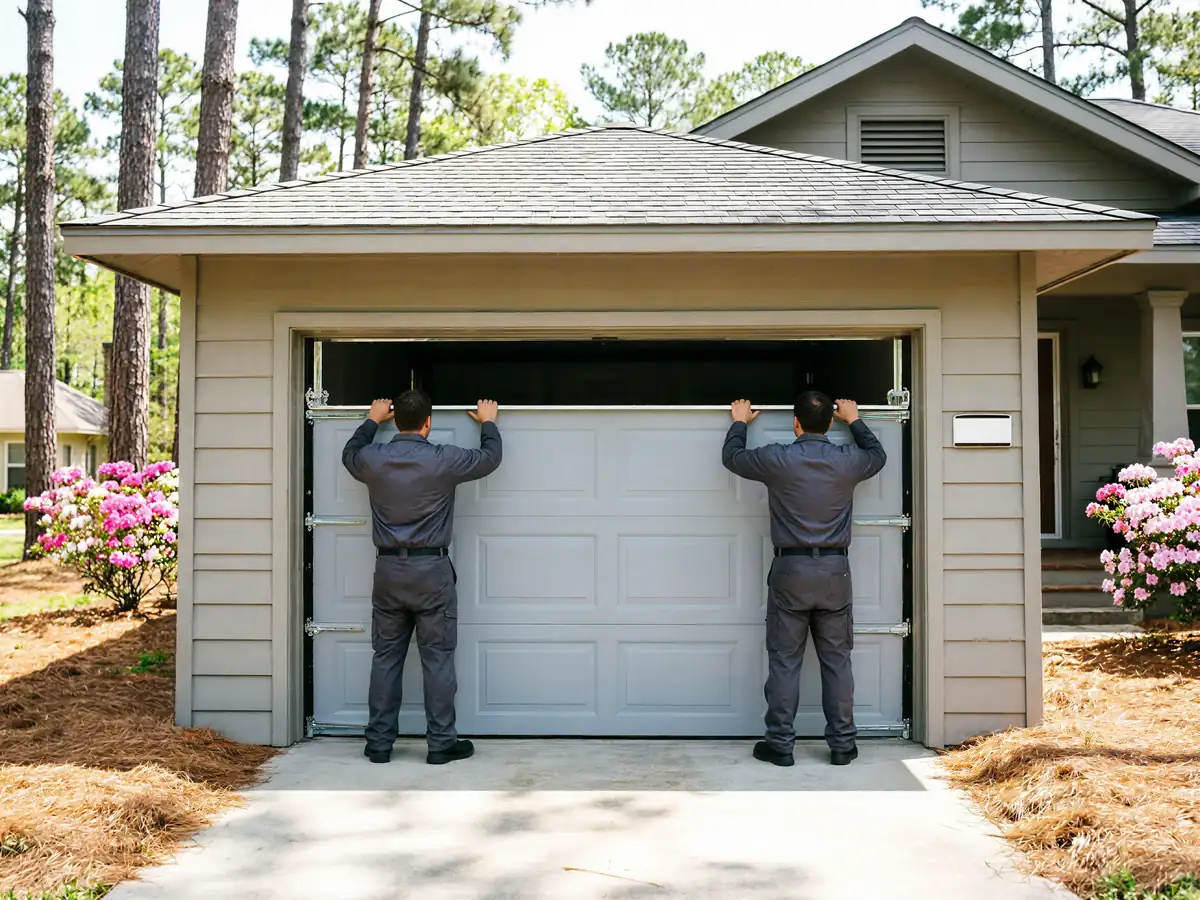
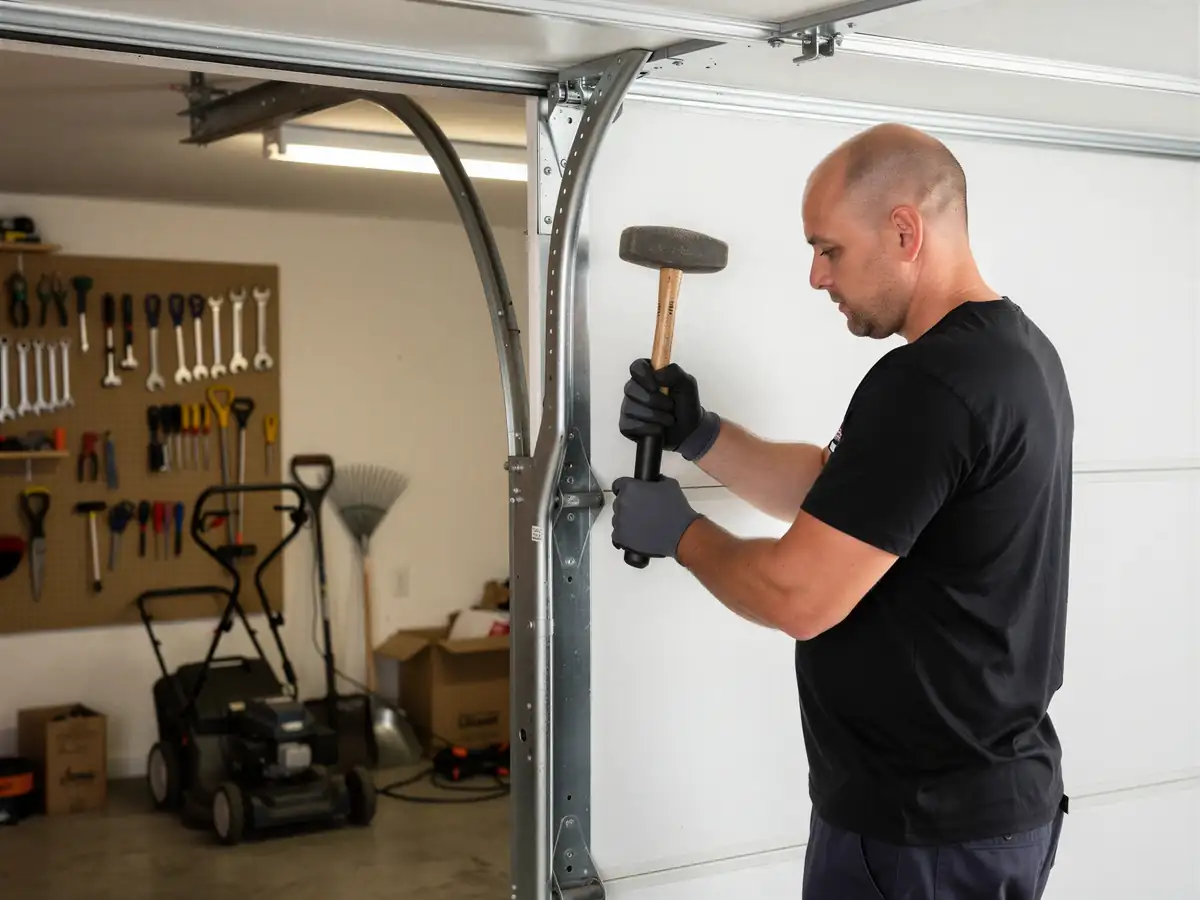
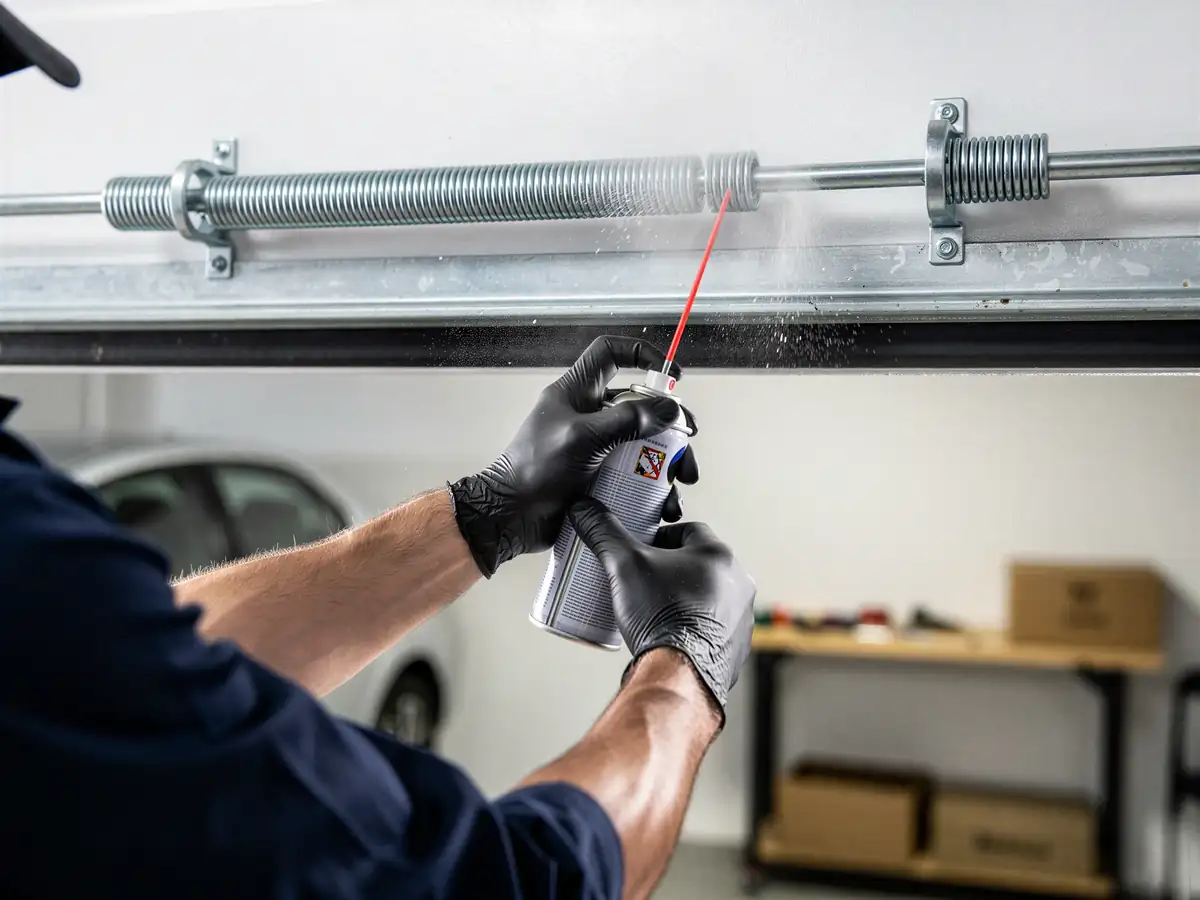
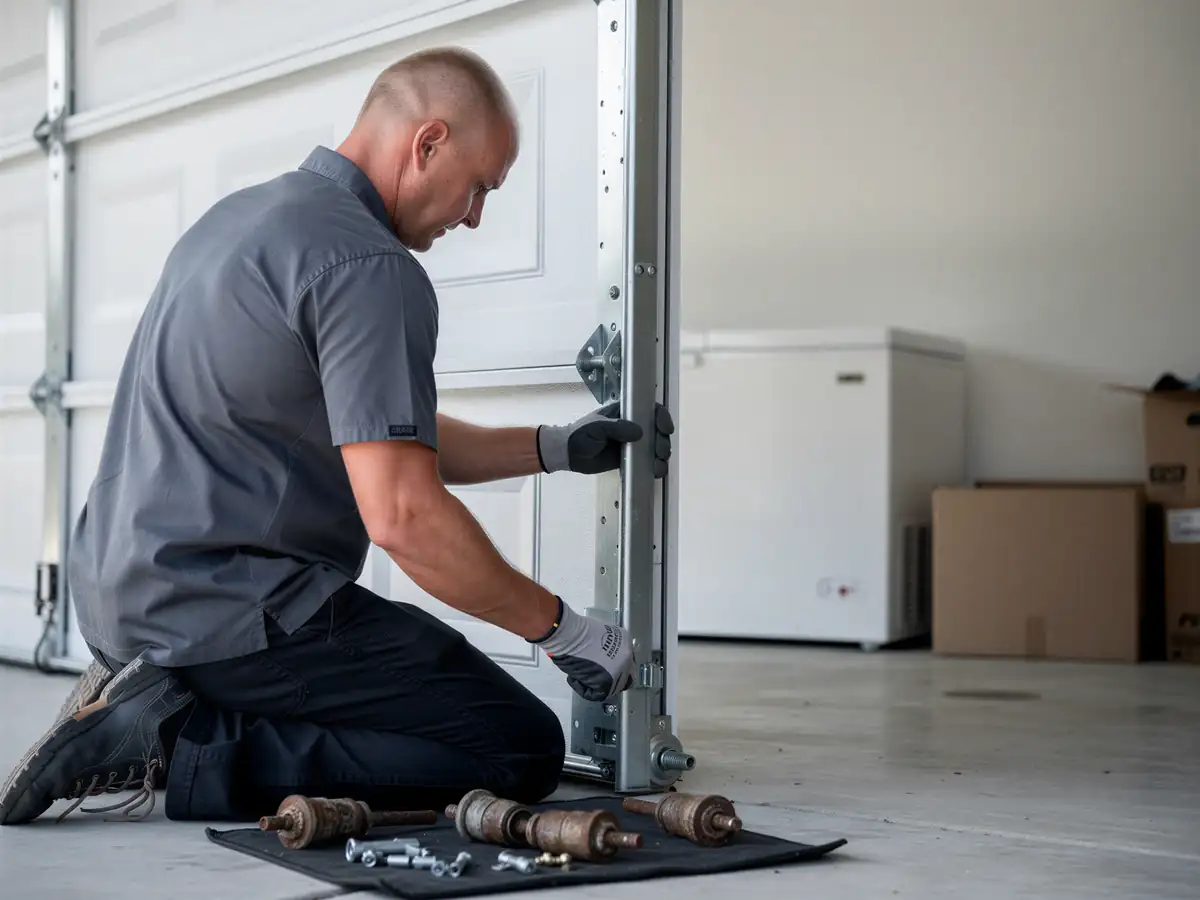
We take the tension off the door - disconnecting the opener and securing the door with clamps or by releasing the spring tension safely - then work the rollers out of the track hinge by hinge, starting at the bottom. Each new roller goes in with the stem seated fully in the hinge bracket before we move to the next one. Once they're all in, we check the track for square, tighten any loose hinges or brackets we find along the way, and lubricate the new rollers before running the door through a full open-close cycle to watch for binding or noise. If the track's out of alignment from the bad rollers, we adjust it on the spot rather than leaving it for a second visit.