What Causes It Around Here
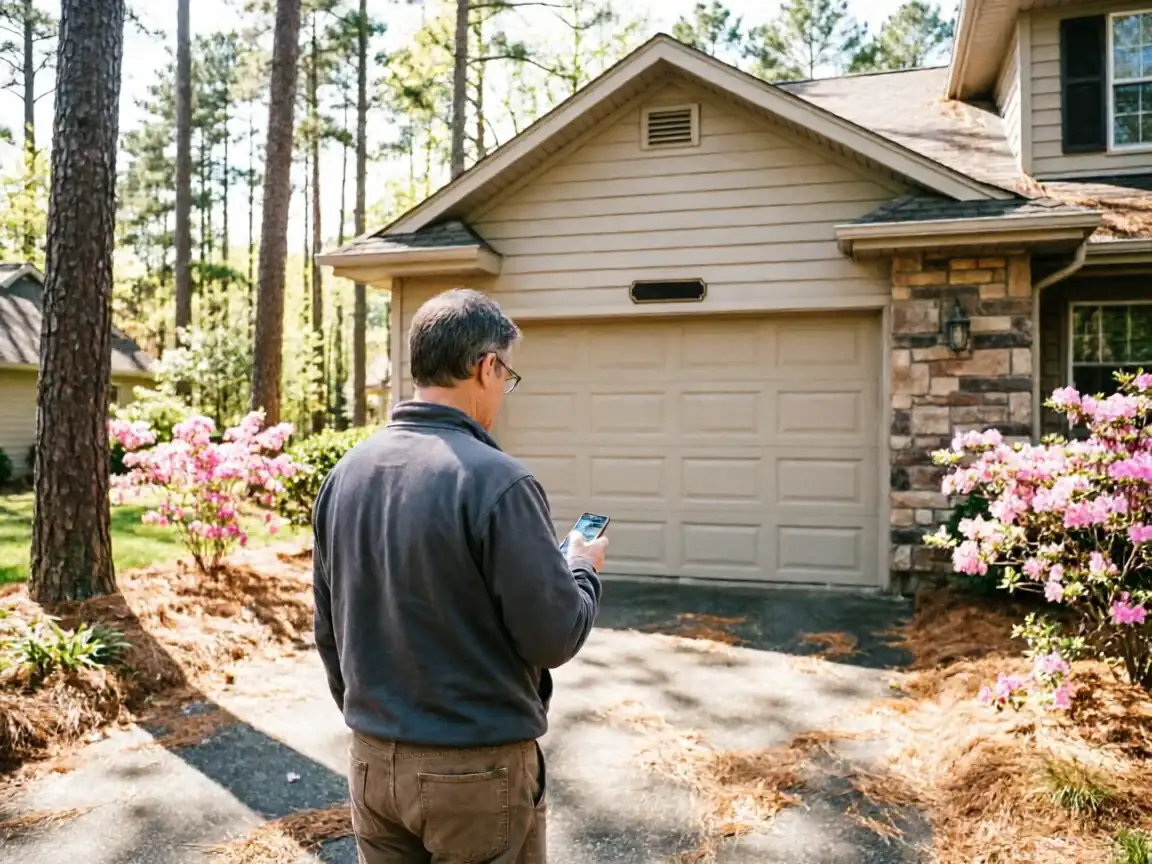
Salem has about 10,140 households, which is a fraction of the wider service area's 40,029 - small enough that we're not chasing a dozen different housing eras in one zip code, and that matters for diagnosis. The median year built here runs around 1971, right in the middle of the 1960s-70s stock that makes up most of this part of the service area. That means a lot of torsion spring setups installed before galvanized coating was standard, paired with openers that have already been swapped out once or twice by whoever owned the house before. Cold-moderate winters do the rest: steel contracts, lubrication thickens, and a spring that was already near the end of its cycle count gives out on the first hard freeze of the season. We see the same handful of failures over and over in a town this size - a cracked spring, a bent track from a slow-building misalignment, a logic board that's finally had enough. It's not dramatic. It's just what happens to a door that's been doing its job quietly for fifty years.
What You Are Seeing
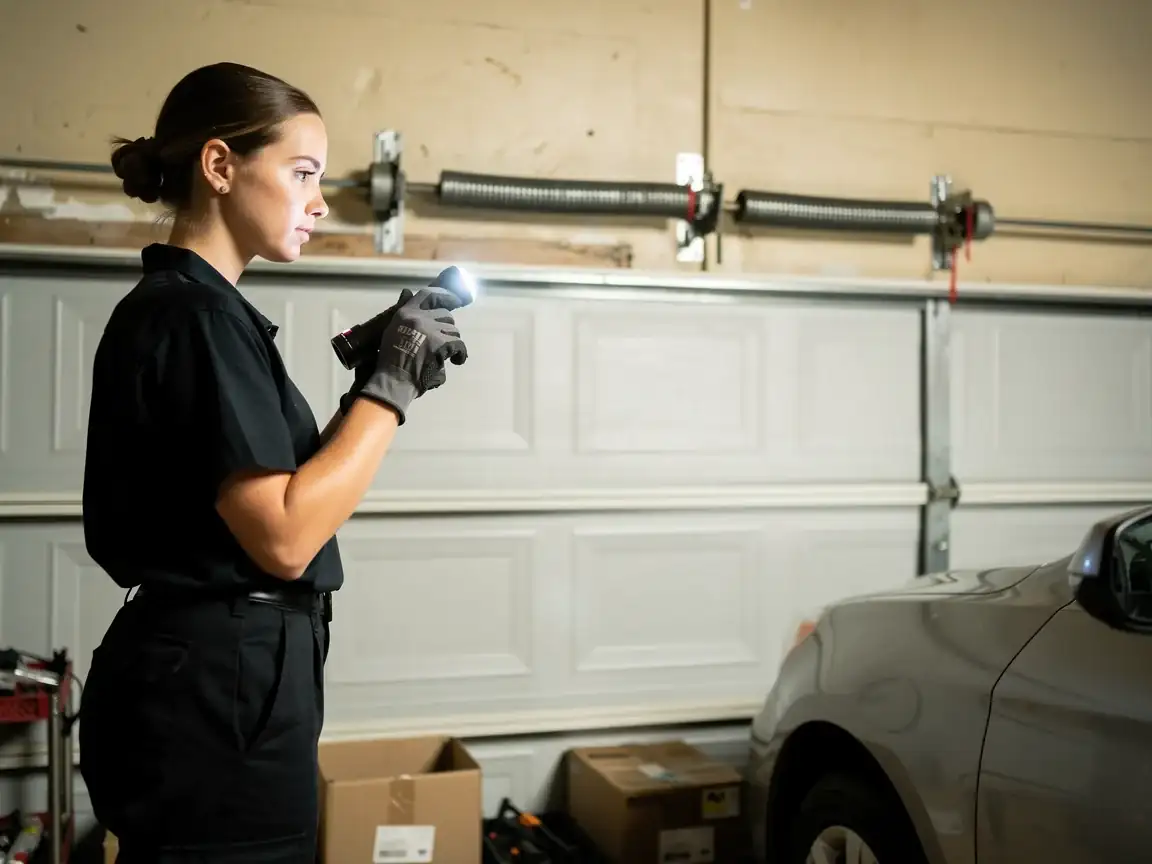
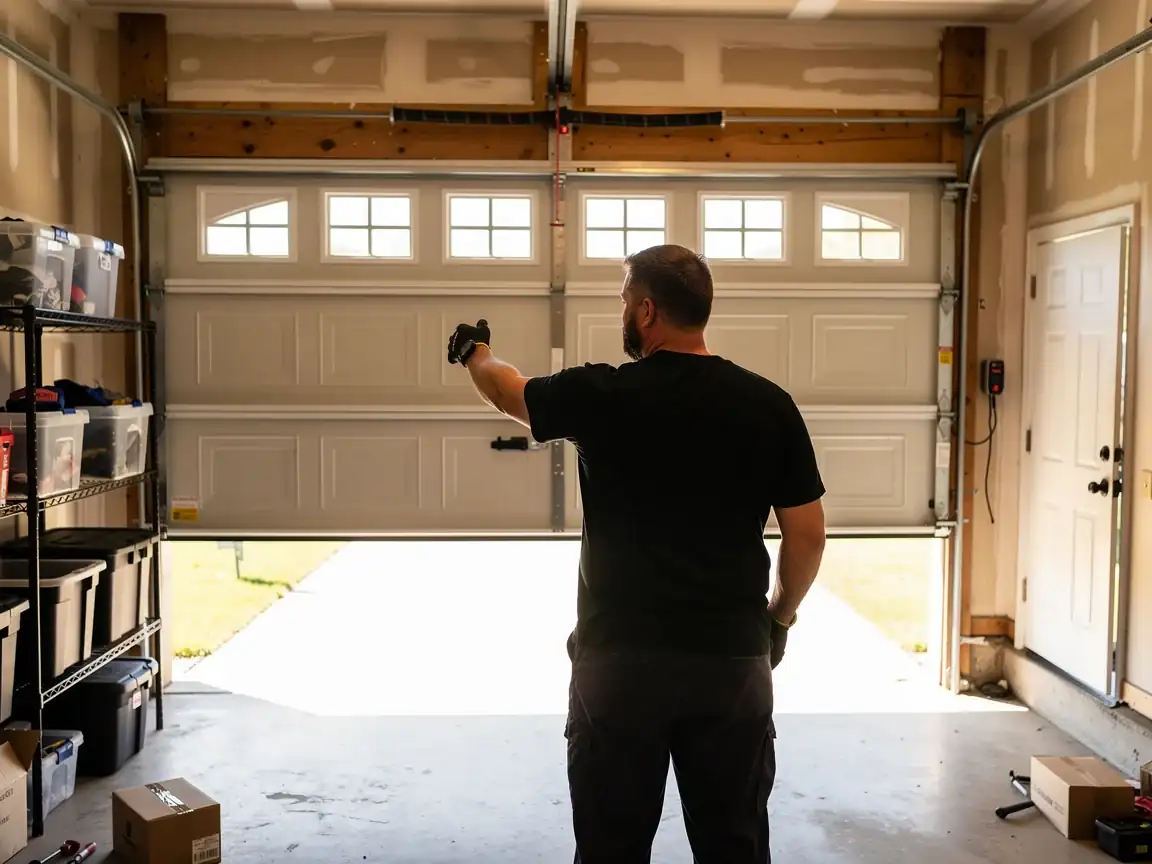
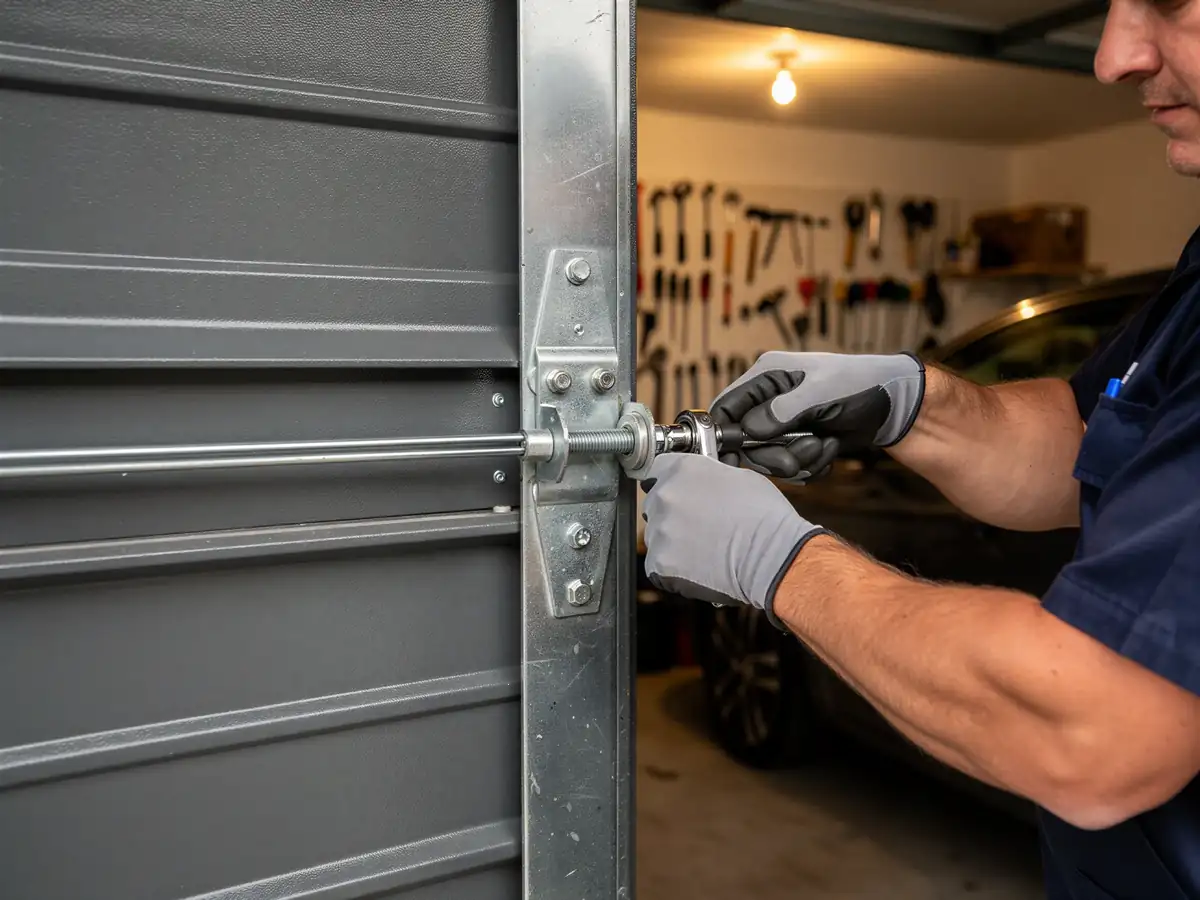
If the door won't lift, or lifts partway and stalls, that's almost always a torsion spring that's lost tension - common on doors from the 1971-era stock that never had the spring replaced. A door that drifts to one side as it closes usually means one cable has stretched more than the other, or a roller has worn out of its track. Openers from this era, even the replacements, tend to fail at the circuit board before the motor itself gives out, so a door that hums but doesn't move is more often electronics than muscle. None of this is specific to a brand of door - it's specific to age and use. A door installed in 1975 has had roughly 20,000 open-close cycles by now if the household uses it twice a day, every day. That's a lot of wear on parts that were never meant to be permanent.
Doing It Yourself
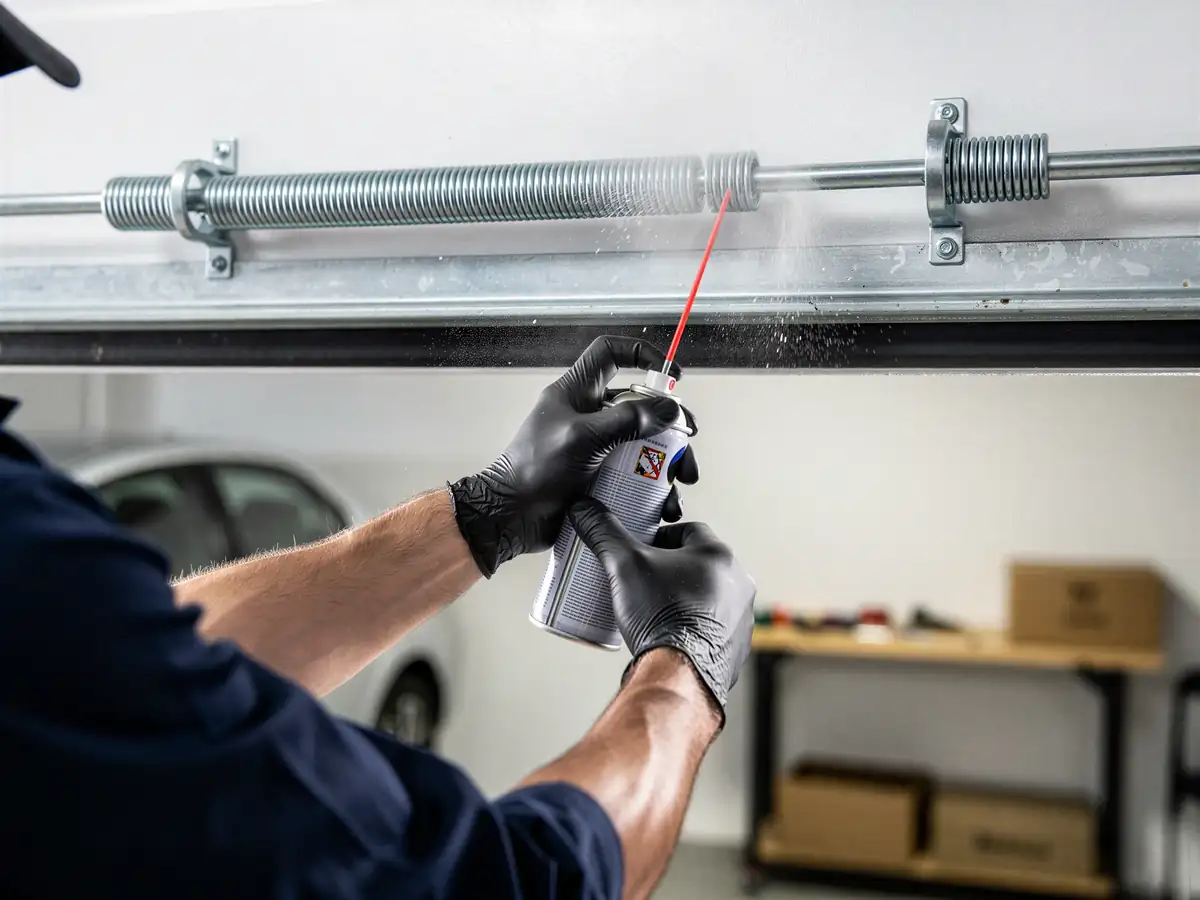
A torsion spring is not a DIY repair - it's under enough tension to break a bone or worse, and that's true no matter how handy you are. Cleaning tracks, tightening loose hardware, and lubricating rollers and hinges are reasonable homeowner jobs and worth doing twice a year given the cold-moderate swings this area sees. If your door is making noise but still opening and closing fully, that's usually a lubrication or alignment issue you can check yourself before calling anyone. If it's stuck, off-track, or the spring has visibly separated, stop and call - trying to force it usually turns a one-part repair into a two-part one.
What It Costs
We don't publish flat prices here because the cost depends on what's actually wrong and what part your door needs - a single spring replacement is a different job than a full opener swap, and the age of the hardware affects part availability. What we can say is that household income in this part of the service area runs lower than some neighboring spots at $66,716 median, and we price jobs the same way regardless of which town we're driving to - the number on the invoice reflects the part and labor, not the zip code.