What Causes It Around Here
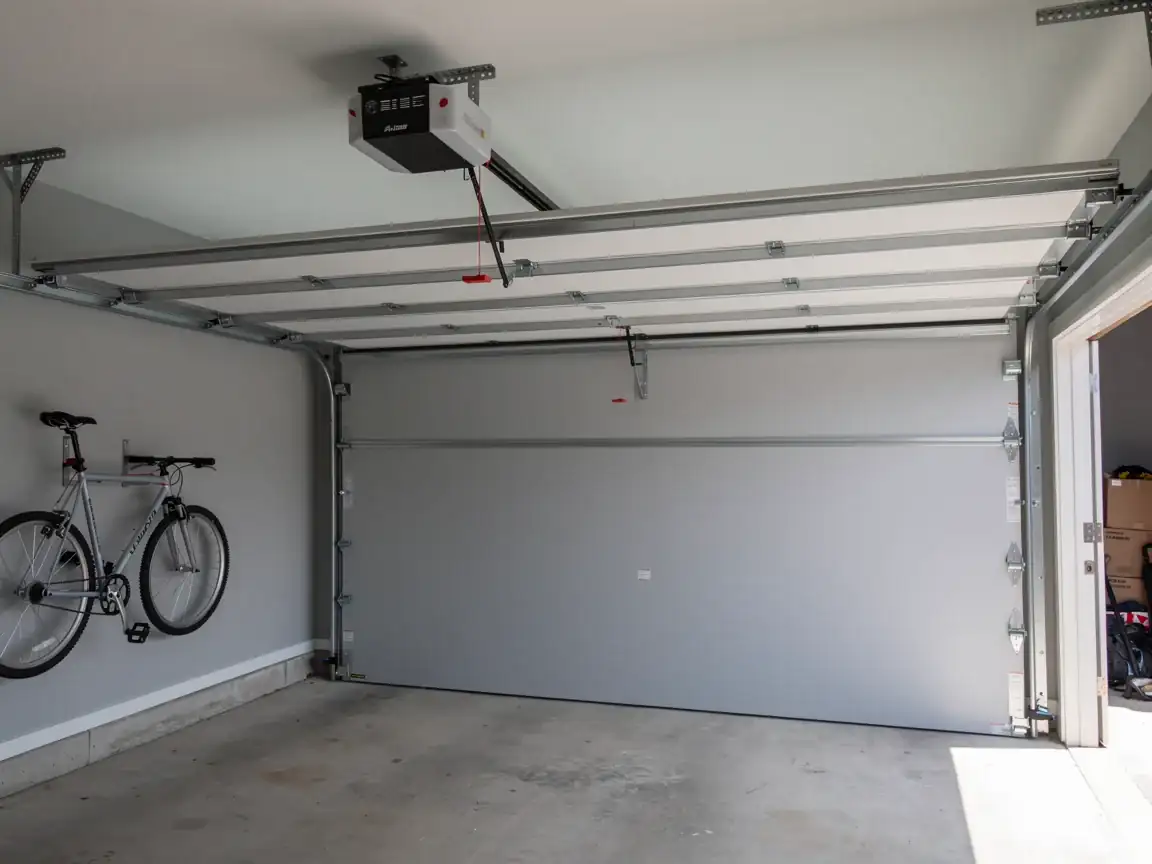
Most houses on this side of Salem went up around 1971, right in the middle of the broader 1960s-70s building wave that shaped this part of the service area. Doors from that era, and the replacement doors that went in through the 80s and 90s to match the original rough openings, almost always shipped with plain steel rollers riding in steel track. That combination was standard then and it's cheap, but steel-on-steel wears fast. No bearing, no nylon sleeve, just a stamped stem and a steel wheel grinding against a steel rail every time the door moves.
After close to fifty years of cycles, those original rollers (or the steel rollers that replaced them once) have usually flattened on one side, developed flat spots, or cracked at the stem. Track wear follows the roller wear, so by the time a homeowner here calls about a noisy or jumpy door, the track often has grooves worn into it that match the bad roller exactly. That's a different repair than a newer door with nylon rollers on galvanized track would need, and it's the fault we expect to find most often once we get a door open in this town.
What You Are Seeing
A scraping or grinding sound as the door travels, usually loudest around the bend where the vertical track curves into the horizontal section. Sometimes the door jerks or hesitates at that same spot. On older steel-roller setups, you'll often see a roller with a visible flat edge if you look closely while the door is moving slowly, or a stem that's bent so the wheel wobbles instead of rolling straight.
If the noise has gotten worse over months rather than showing up overnight, that's consistent with gradual wear rather than a sudden break, which is the usual pattern for roller failure on a door this old.
Doing It Yourself
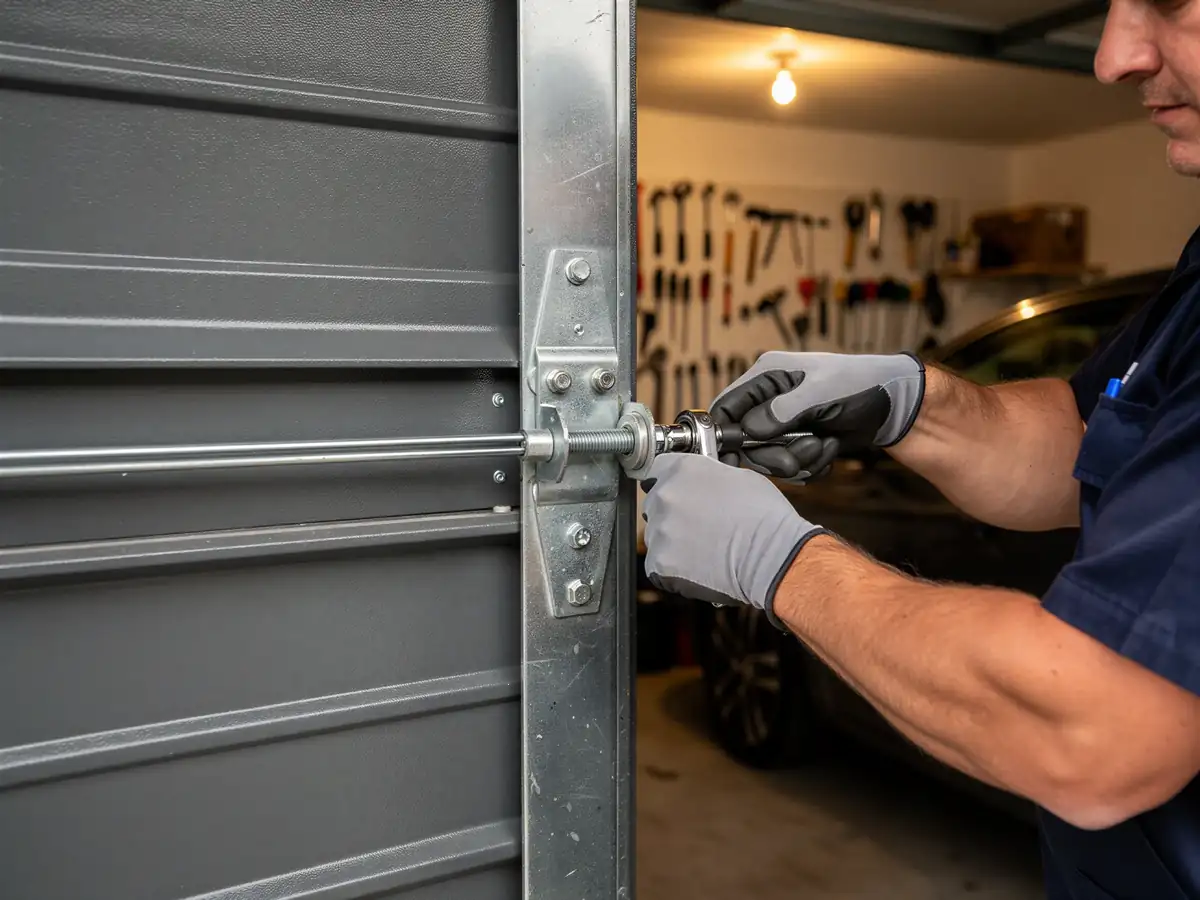
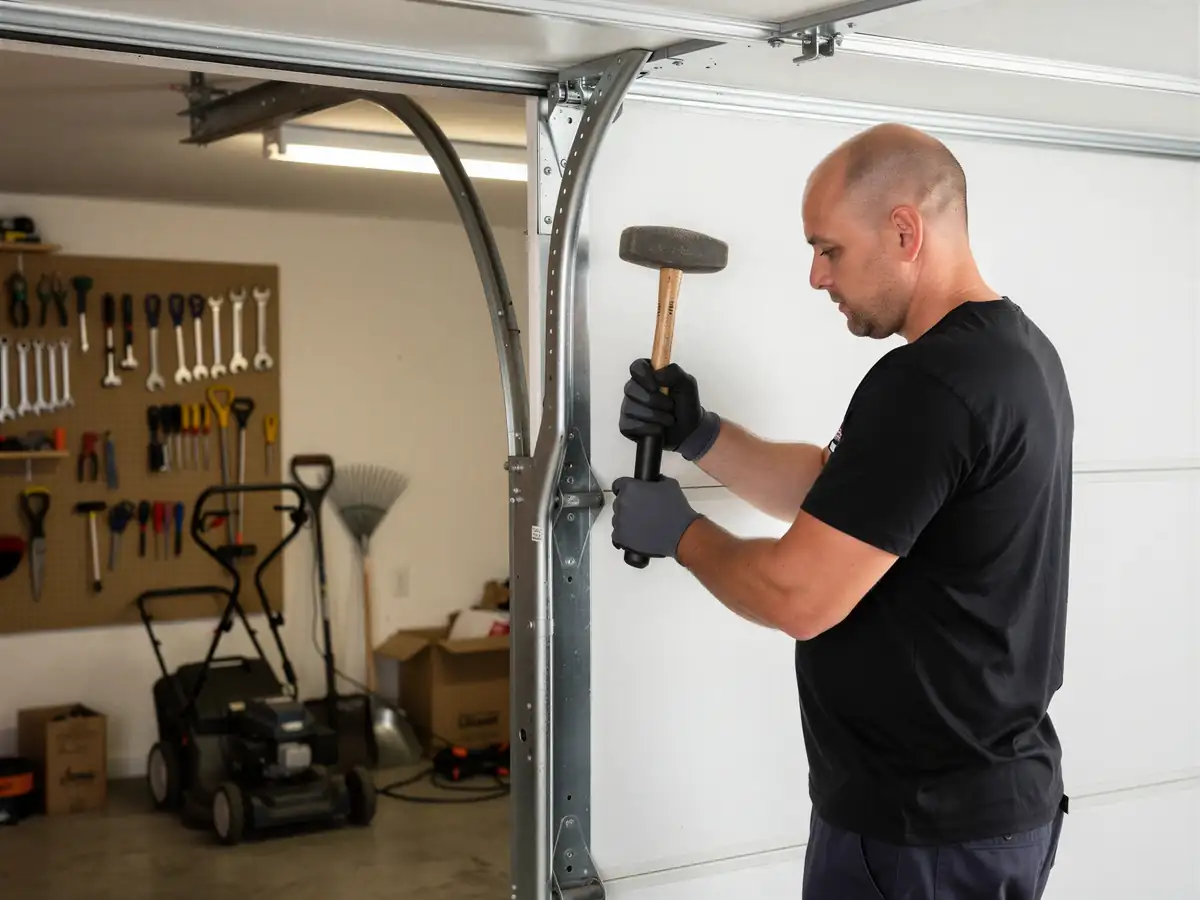
Swapping a single roller on an unlocked track is within reach for some homeowners if the door is down, the opener is disconnected, and the spring tension is released first. Where people get hurt is skipping that last step, or trying to pull a roller out of the bottom bracket near the cable, which is under tension on a door this old whether the spring looks fine or not.
We'd rather talk you through what's safe to check yourself (does the roller spin freely, is the stem bent, is there a flat spot) than have you open up a track on a door with original 1970s-era hardware you can't get parts for locally anymore.
What It Costs
We don't have a fixed number to quote here without seeing the door, since the cost depends on how many rollers are bad and whether the track needs attention too. What we can say is that this is one of the less expensive repairs we do, and on a door this age it's usually worth doing rather than replacing the whole door, unless the panels themselves are also failing.
How We Fix It
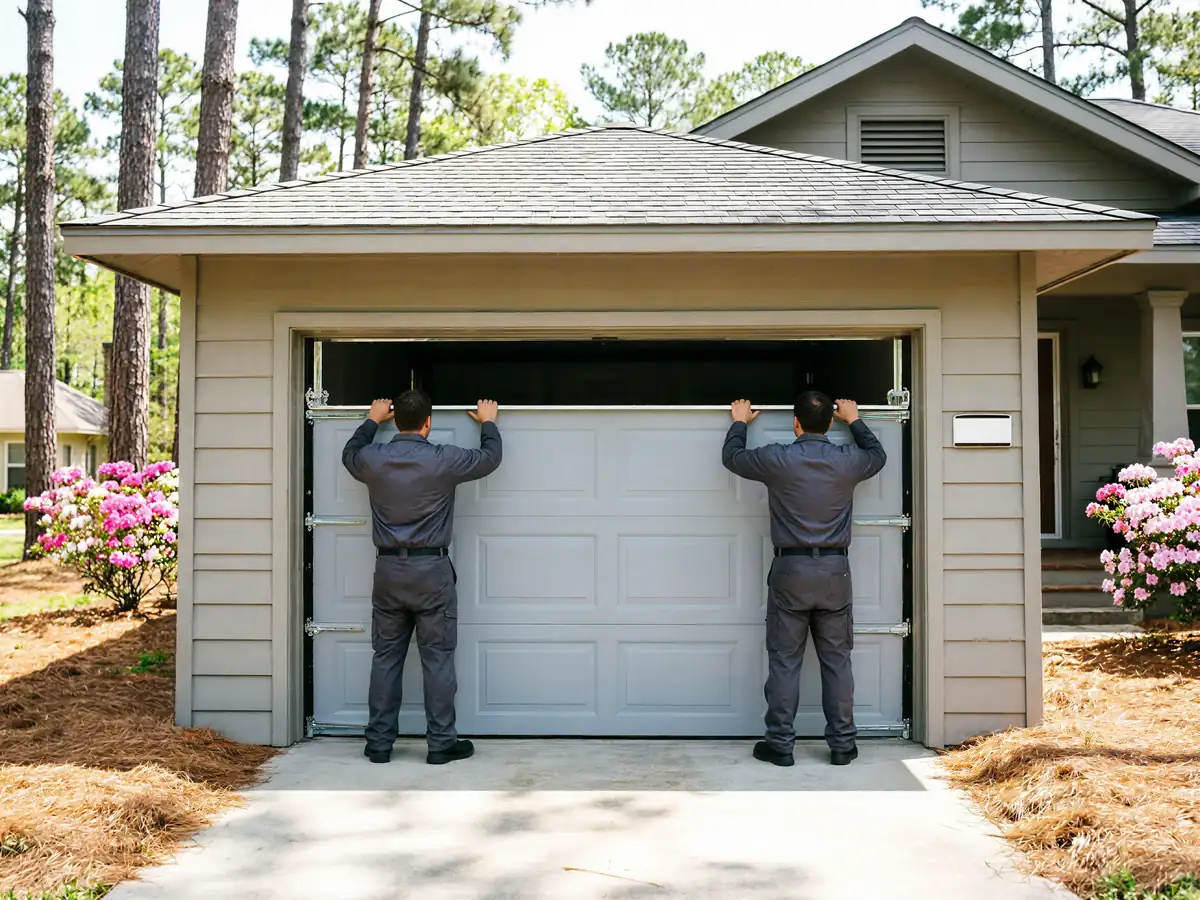
We come out from Roanoke, about 5 miles to Salem
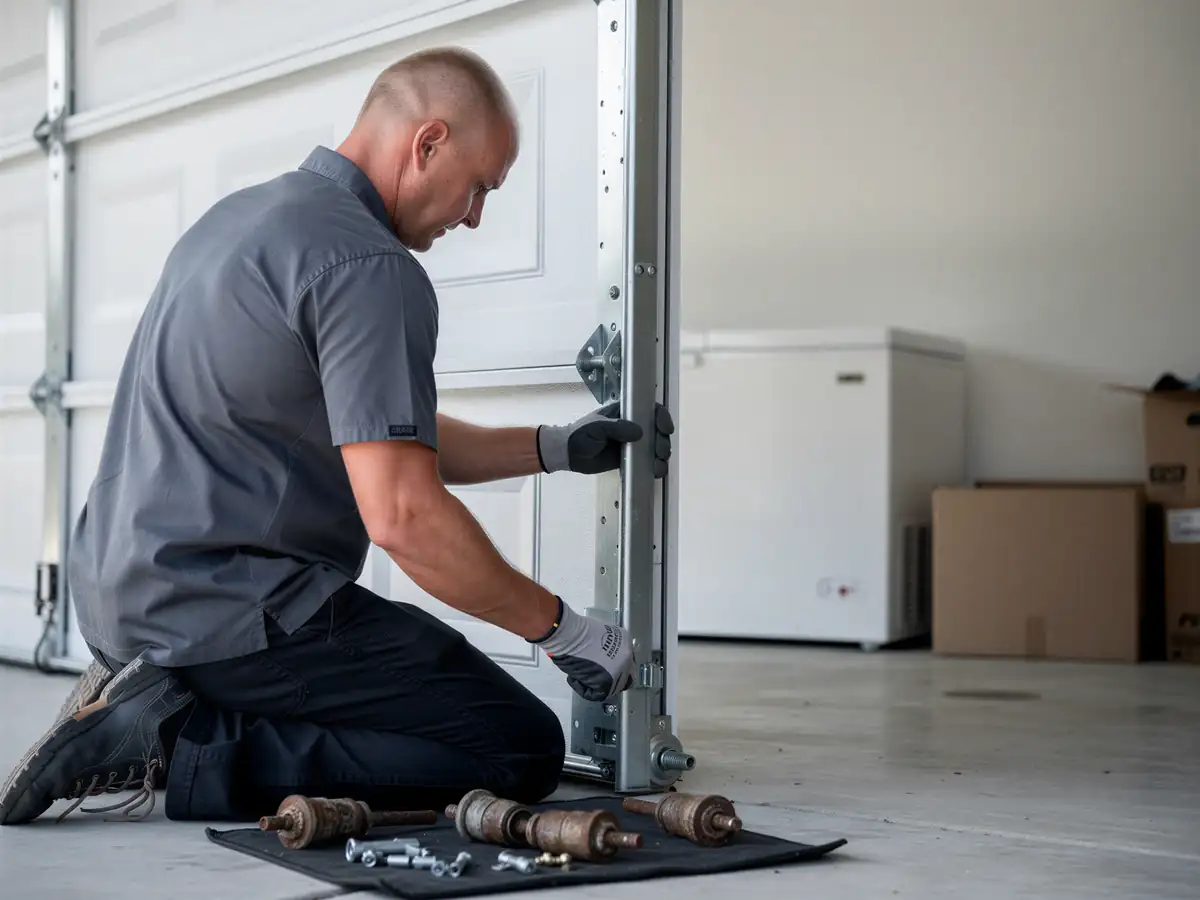
With rollers and track stock on the truck for the sizes that show up most often in houses built in this era. We pull the bad rollers, check the stems and brackets they sit in, and inspect the track for wear grooves before putting anything new in. If the track's worn enough that a new roller would just chew through it again, we'll tell you that straight rather than swap parts and send you on your way with the same problem six months out.
- 5 miles
For the full range of services we handle on Salem garage doors
See our Salem garage doors page. For more detail on how we approach this specific repair across the service area, see our roller replacement page.