What Causes It Around Here
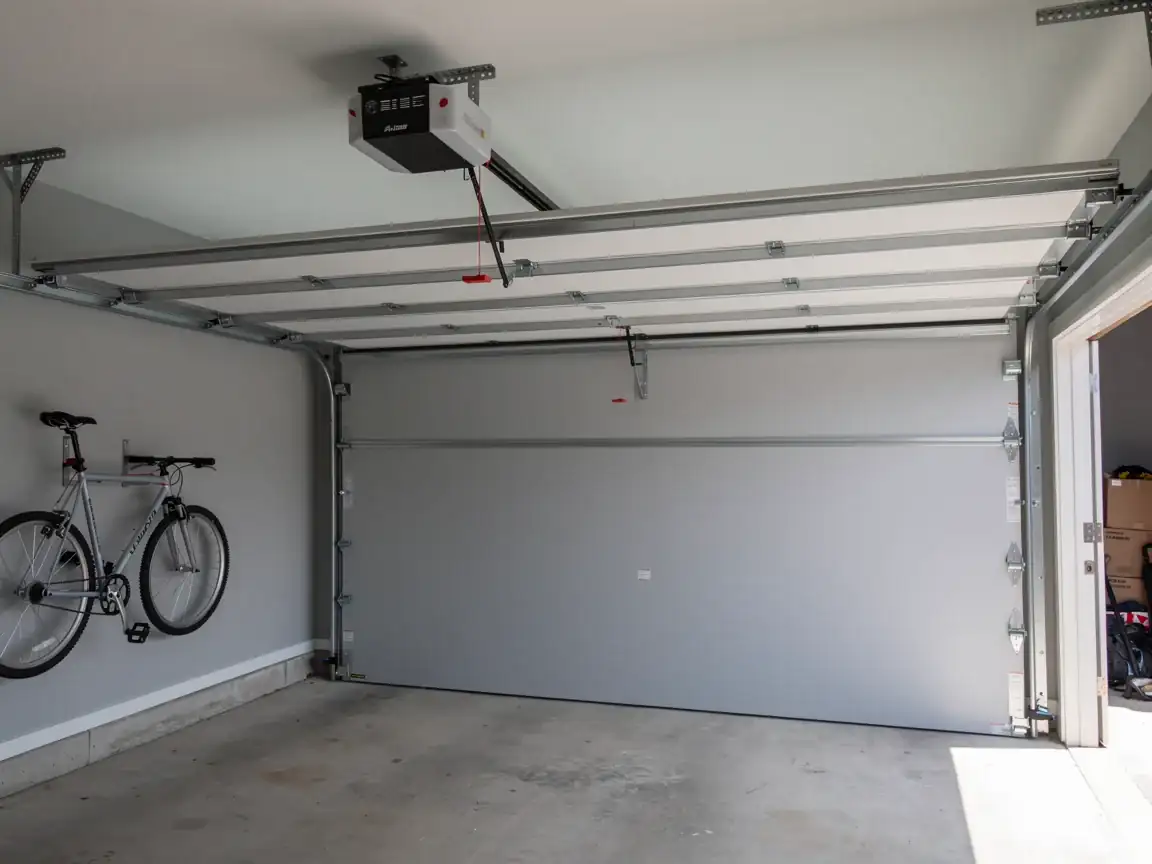
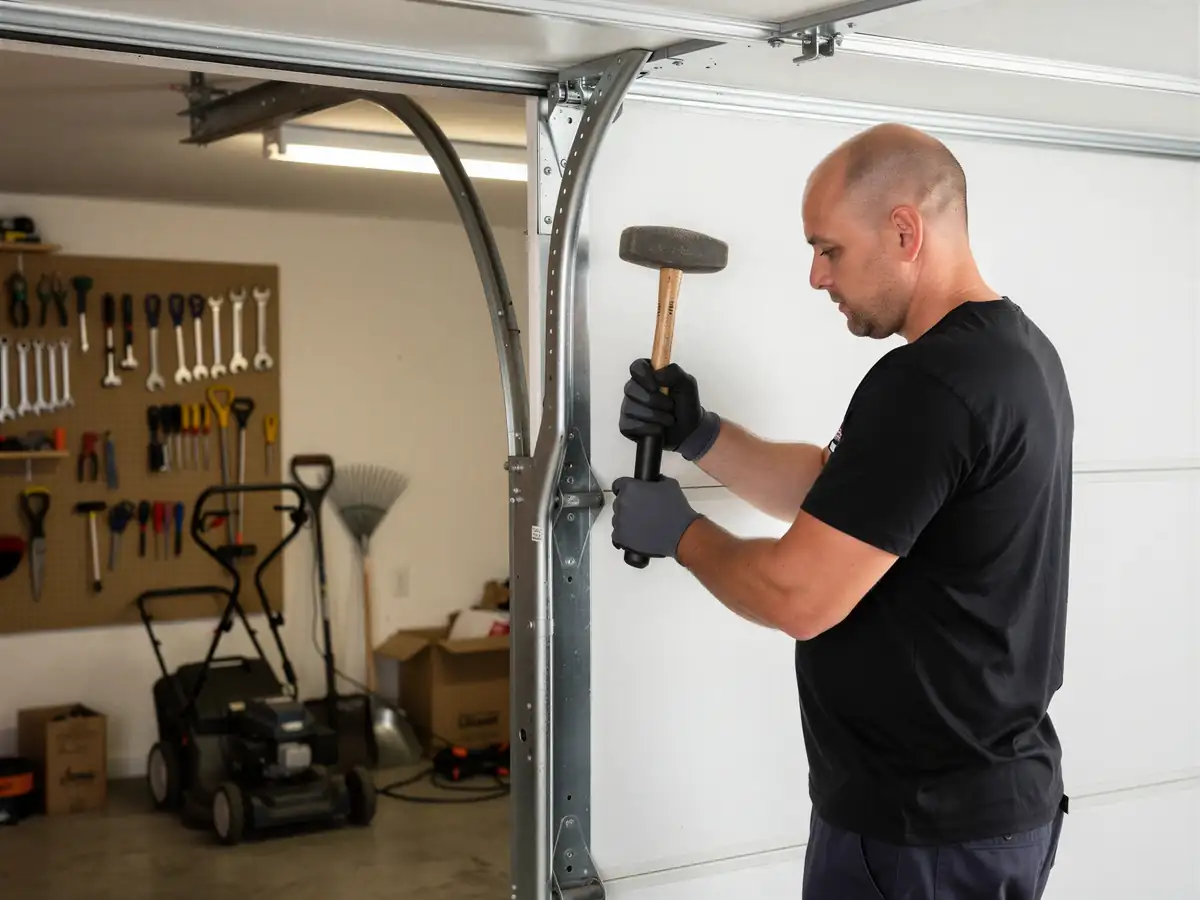
The fault we see most in Salem is a door that's jumped the track on one side because a roller has worn down or a hinge has pulled loose from the panel. It's rarely the opener's fault, and it's rarely both sides at once - that's the tell that tells you it's a track problem, not a spring problem.
Salem's housing stock runs older than a lot of the Roanoke area, with a median build year around 1971. Doors and track hardware installed in that era were built to the standards of their time: lighter gauge steel track, fewer rollers per side, and brackets that were never meant to carry forty-plus years of thermal expansion and contraction. By now a lot of that original hardware has loosened at the lag bolts, or the track itself has pulled slightly out of plumb where the wall framing has settled. That's what knocks a door off its rails - not one dramatic event, just decades of small movement finally catching up.
Our broader service area has housing going back to 1953 and as recent as 2002, but Salem sits solidly in that older middle band. If your door is original to the house, the track is original too, and original track from 1971 was not engineered for the heavier insulated doors a lot of owners have swapped in since.
What You Are Seeing
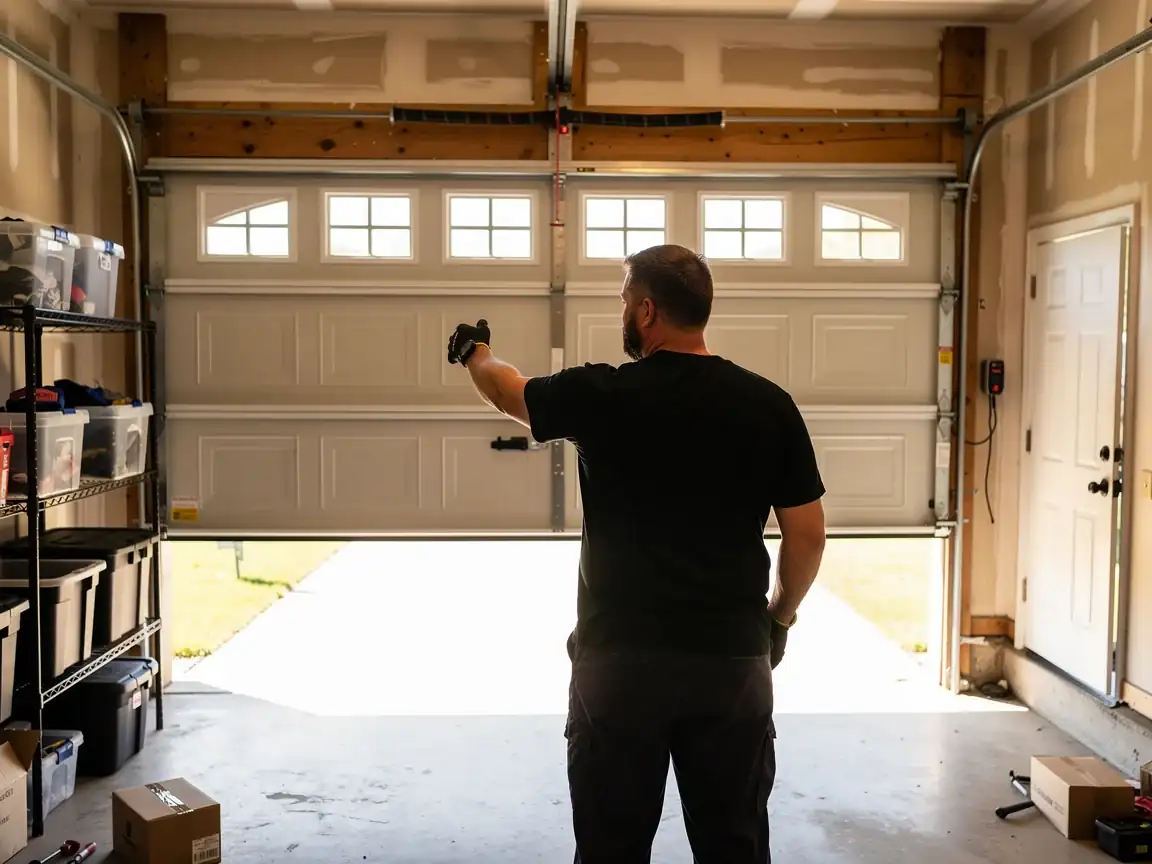
A door that's off track usually shows itself in one of a few ways: the door stops partway and won't go up or down, it hangs crooked with one corner lower than the other, or you can see daylight between the roller and the track on one side. Sometimes the bottom panel has popped out of the track entirely while the rest of the door is still riding normally above it.
If the door still moves but grinds or chatters, the roller is probably riding the edge of the track rather than sitting inside it - that's an early-stage version of the same problem, and it's cheaper to fix now than after the roller finally jumps clear.
Do not keep running the opener once a panel is visibly off the rail. Forcing it usually bends the track further, and on a door this age, replacement track for an obsolete profile isn't always sitting on a shelf.
How Long It Takes
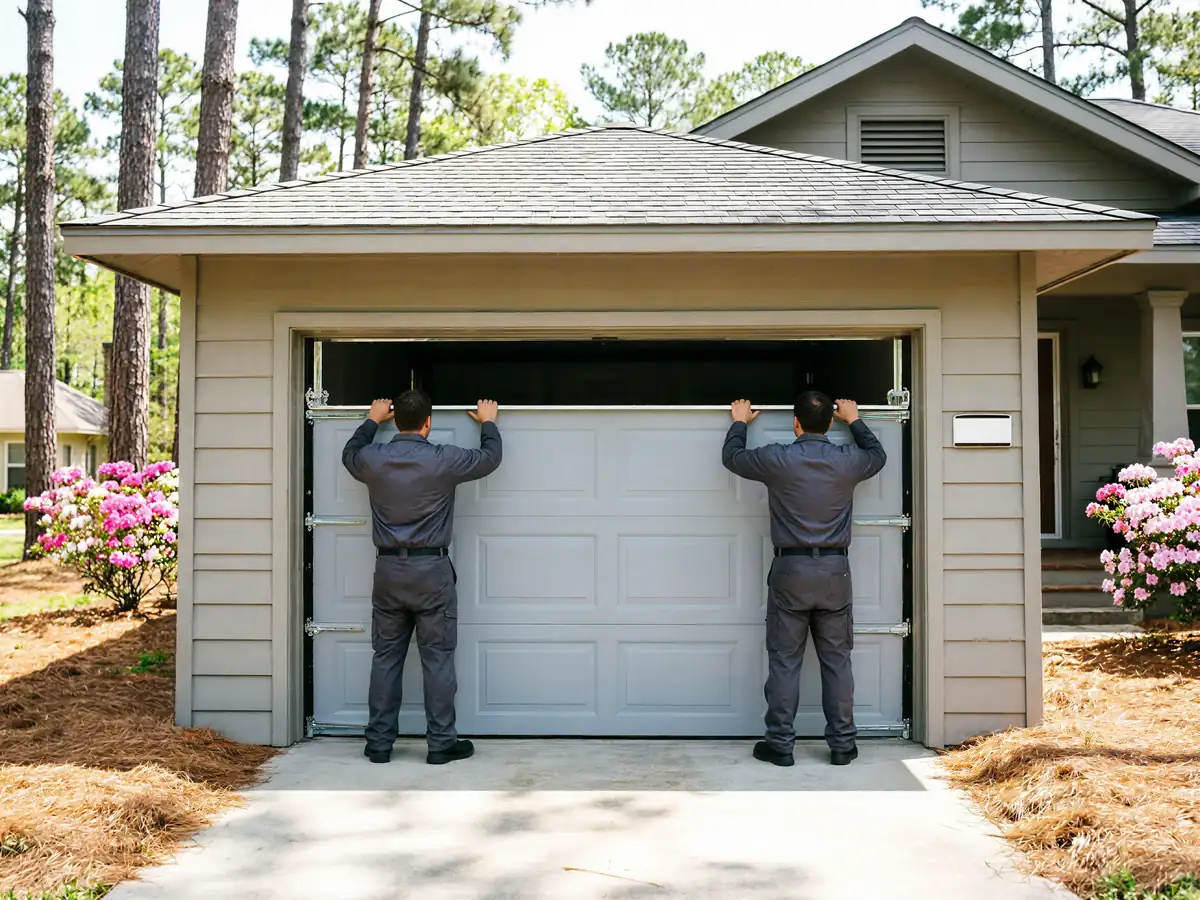
Realigning a door that's off track on one roller
With the track itself still straight, is usually the fastest job we do - often under an hour once we're on site. If the track is bent, which is common on hardware this old, we have to straighten or swap the bent section before the door will ride true again, and that adds time.
We come from Roanoke, about 5 miles out
So factor that drive into when we can get there rather than how long the repair itself takes once we arrive.
- 5 miles
Doing It Yourself
If the door is only slightly off and still moves by hand, you can sometimes reseat a roller yourself by releasing tension at the bracket, guiding the roller back into the channel, and retightening - but only with the opener disconnected and the door manually supported. If a cable is involved, or if the door is heavy and under spring tension, stop. That's not a DIY repair, that's a trip to the ER.
One honest limitation: we don't recommend owners attempt anything involving the torsion spring or a bent track section themselves. Spring tension on even a standard residential door can cause real injury, and bent track that's forced back into shape by hand usually just bends again under the next load cycle.
What It Costs
We don't have a posted price for off-track repair here, and we're not going to invent one - it depends on whether it's a simple roller reseat or a bent track replacement, and on whether the hardware on a 1971-era door even matches what's stocked today. What we can tell you is that Salem households have a median income of $66,716, somewhat below the wider service area's $71,199, and we price the job on what it actually needs, not on a flat menu rate.
How We Fix It
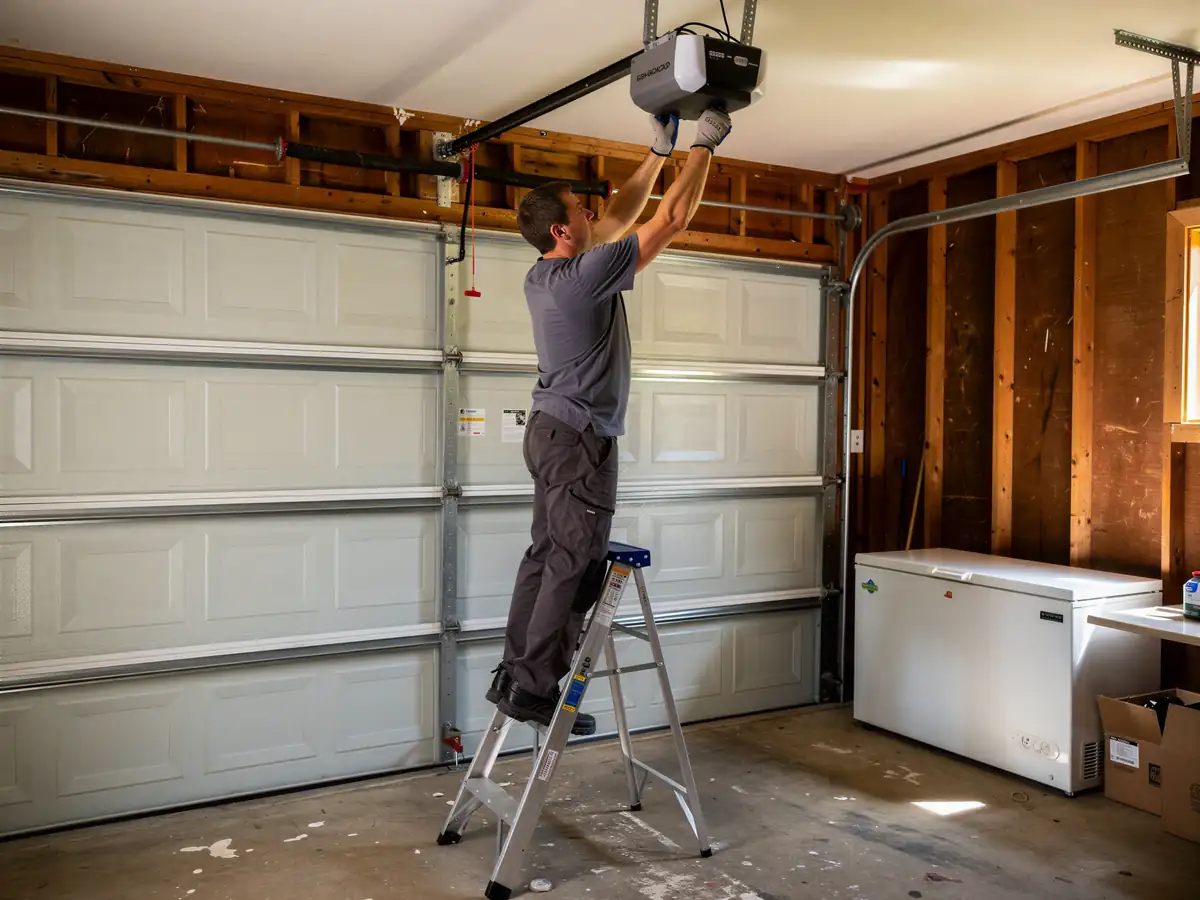
We start by disconnecting the opener so the door can't run while we're working
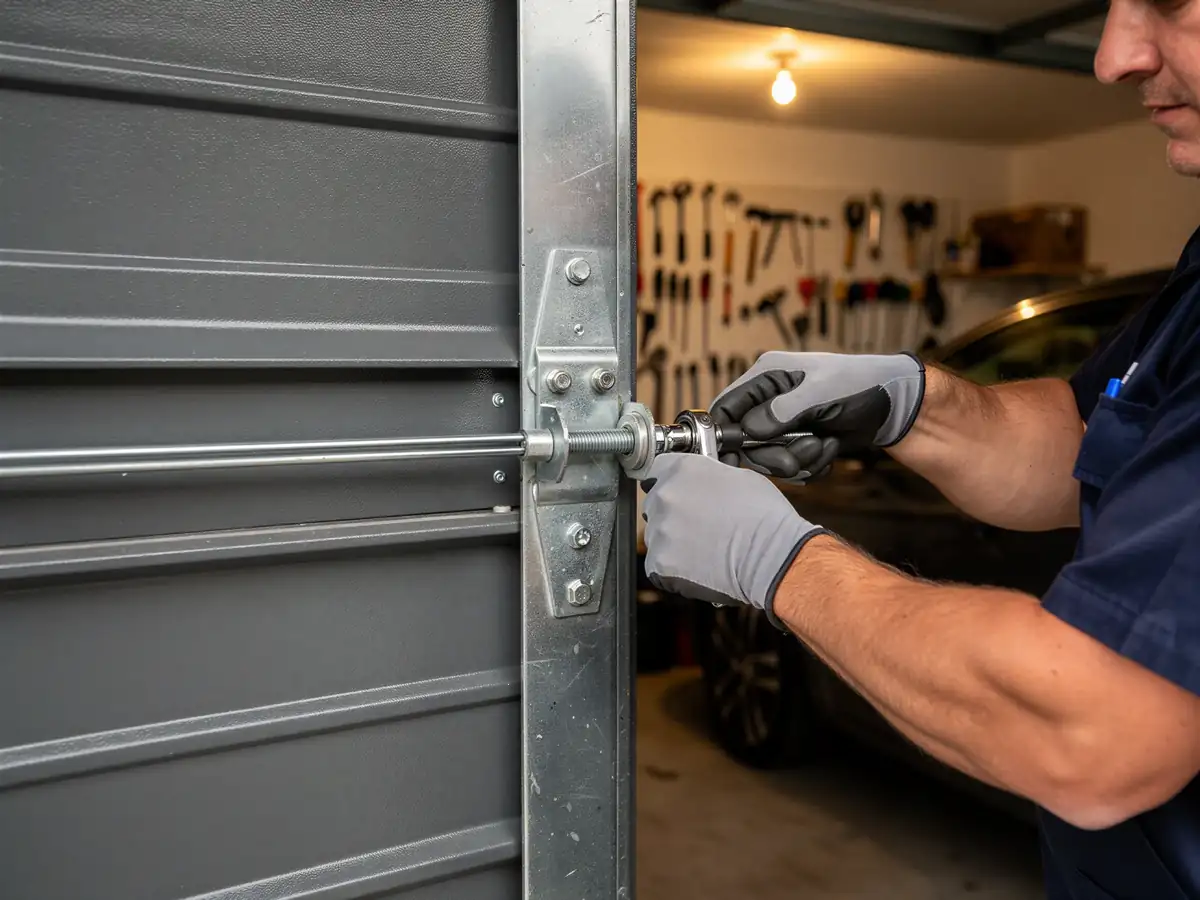
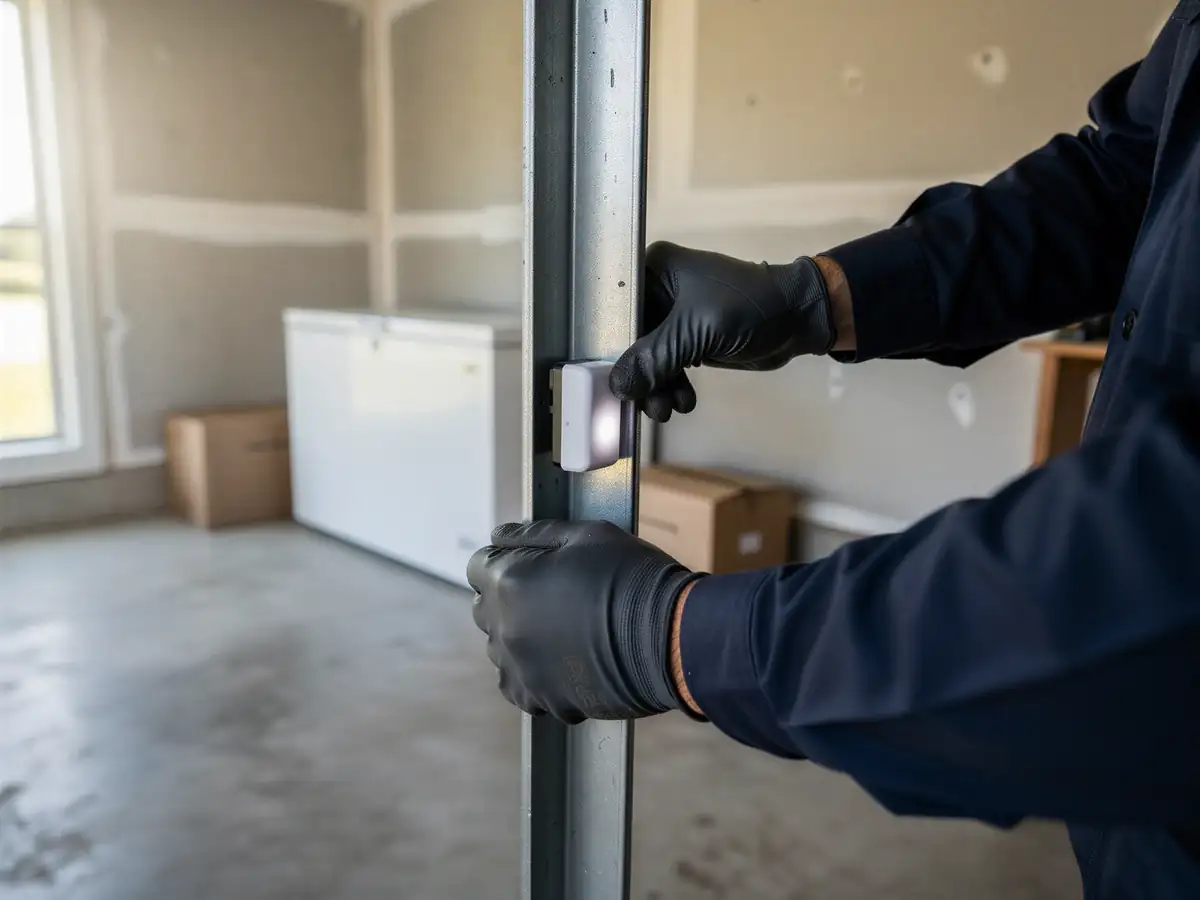
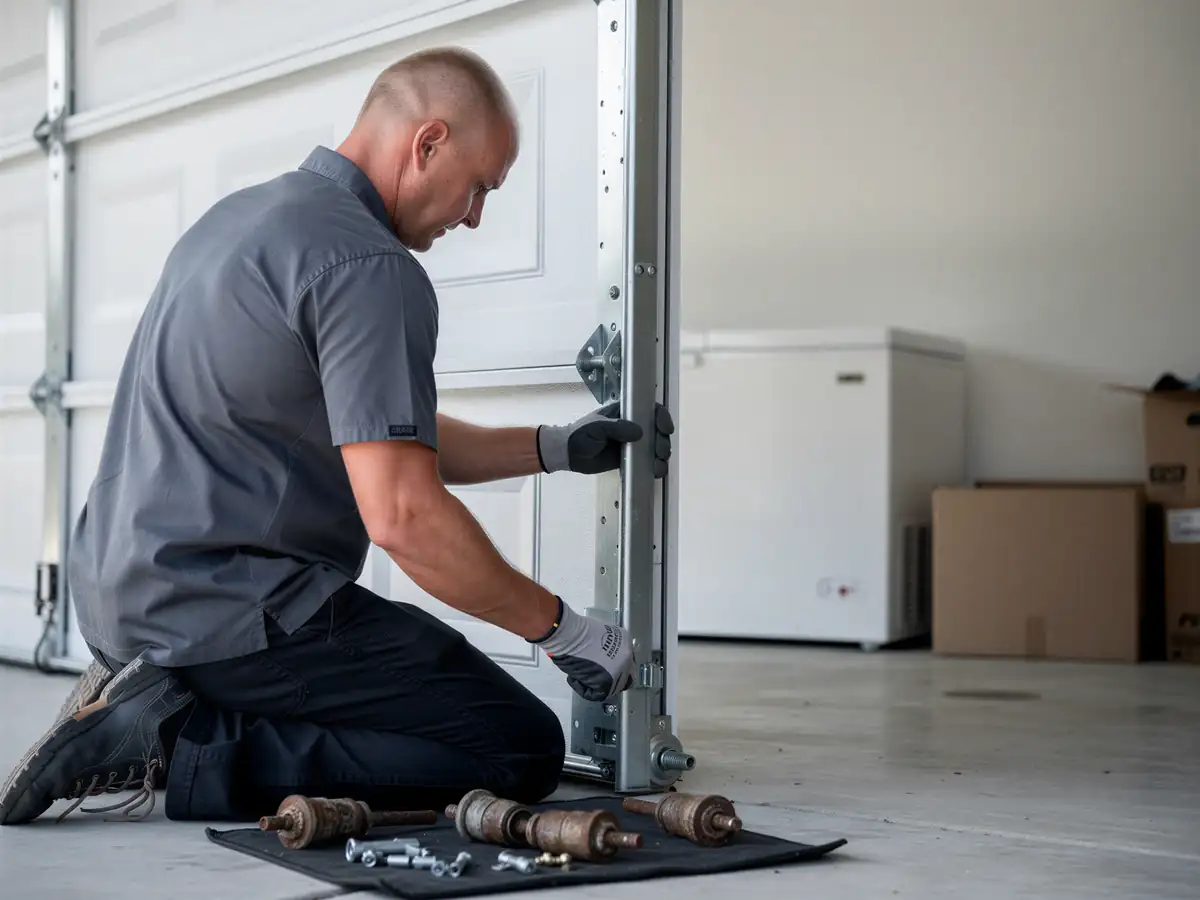
Then check whether the issue is a loose roller, a bent bracket, or a track that's pulled out of alignment with the frame. On Salem's older housing stock we often find the track hardware itself has loosened at the mounting points over the decades, so we re-anchor it before attempting to realign anything.
If the track is bent, we straighten it where that's structurally sound
Or replace the section where it isn't - bent track that's been forced back into shape more than once tends to fail again, and we'll tell you straight if that's the case rather than patch it a third time. Once the door is back in the channel, we run it through a full open-close cycle under load to confirm it's tracking true before we leave.