Stocked Parts
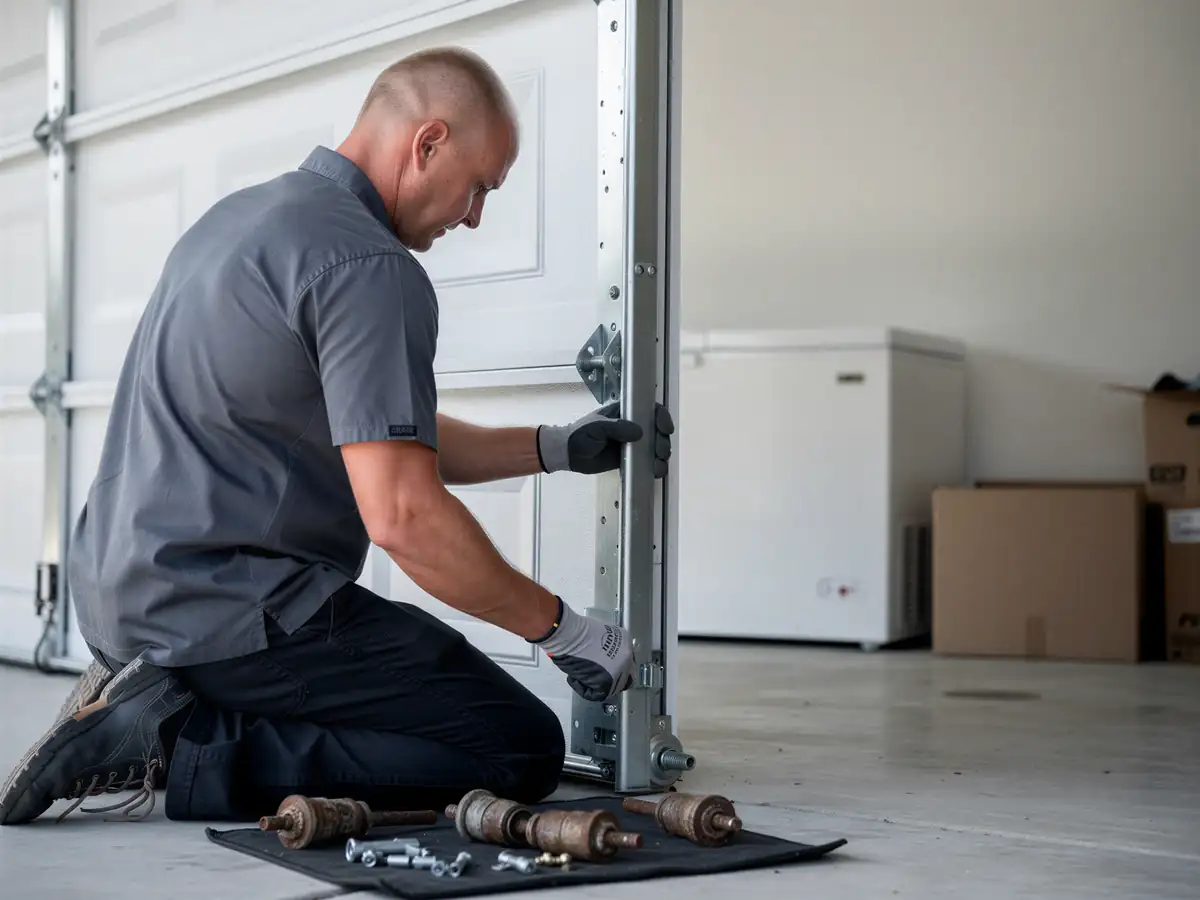
Most of what fails on a Blue Ridge garage door roller job is nylon or steel rollers sized for the stem-and-wheel hardware that was standard when houses out here were going up - the median build year is 1977, and a lot of that stock still runs the original track width. We carry both 7-ball nylon rollers and sealed-bearing steel rollers on the truck, since a house from that era can have either depending on whether the door's been swapped once already. What we don't stock are oddball European or proprietary rollers from newer high-end doors - those are special order, and if that's what's on your house, we'll tell you the lead time before we start rather than after. Track brackets and hinges come along too, since a worn roller usually means the track taking the brunt of it is bent or chewed up at the same spots. We load for the common case first: steel-on-steel from the 1970s-80s, not the exception.
Doing It Yourself
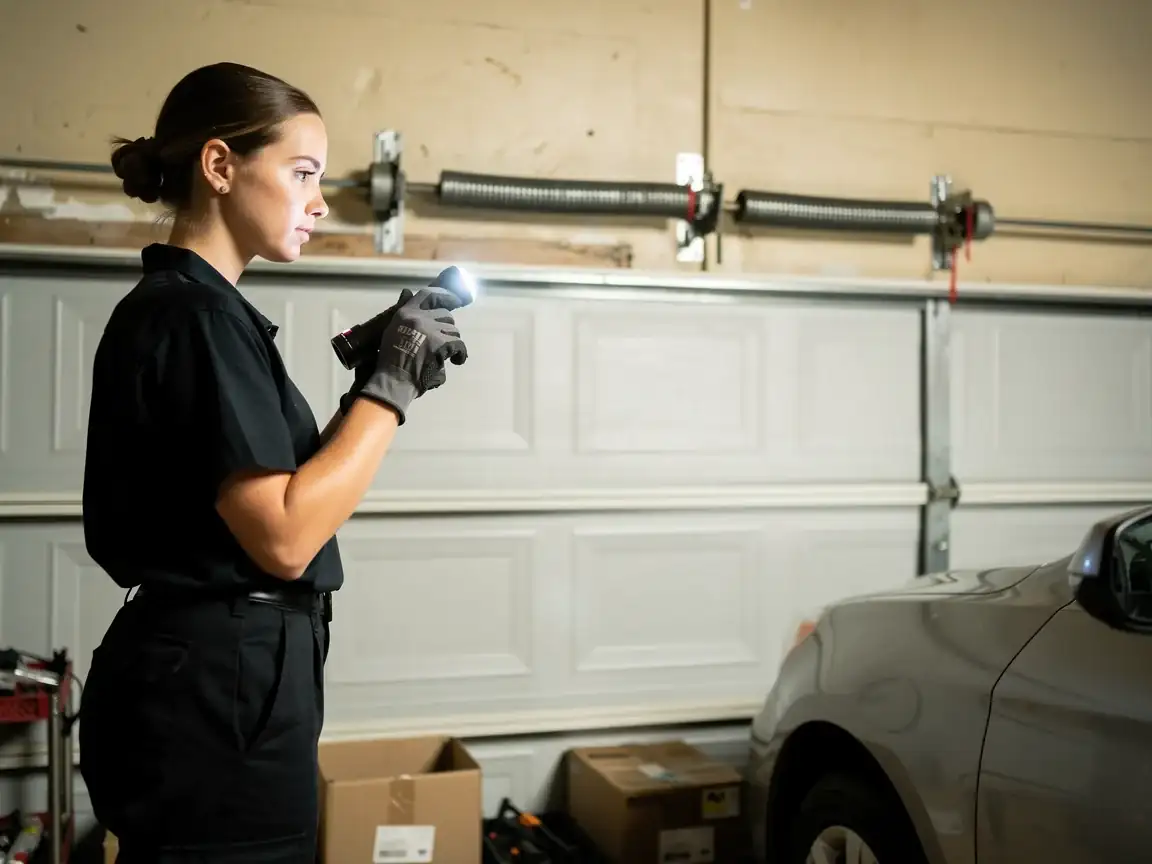
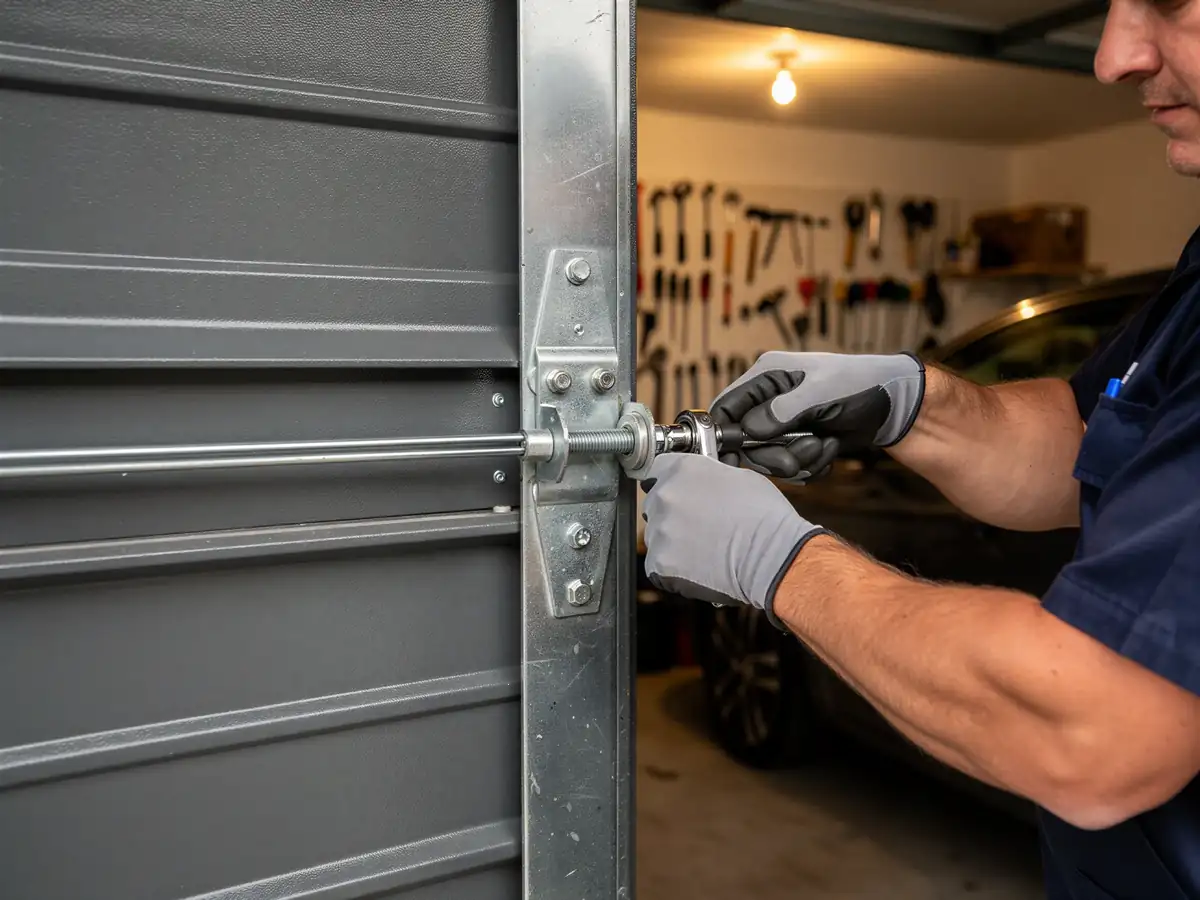
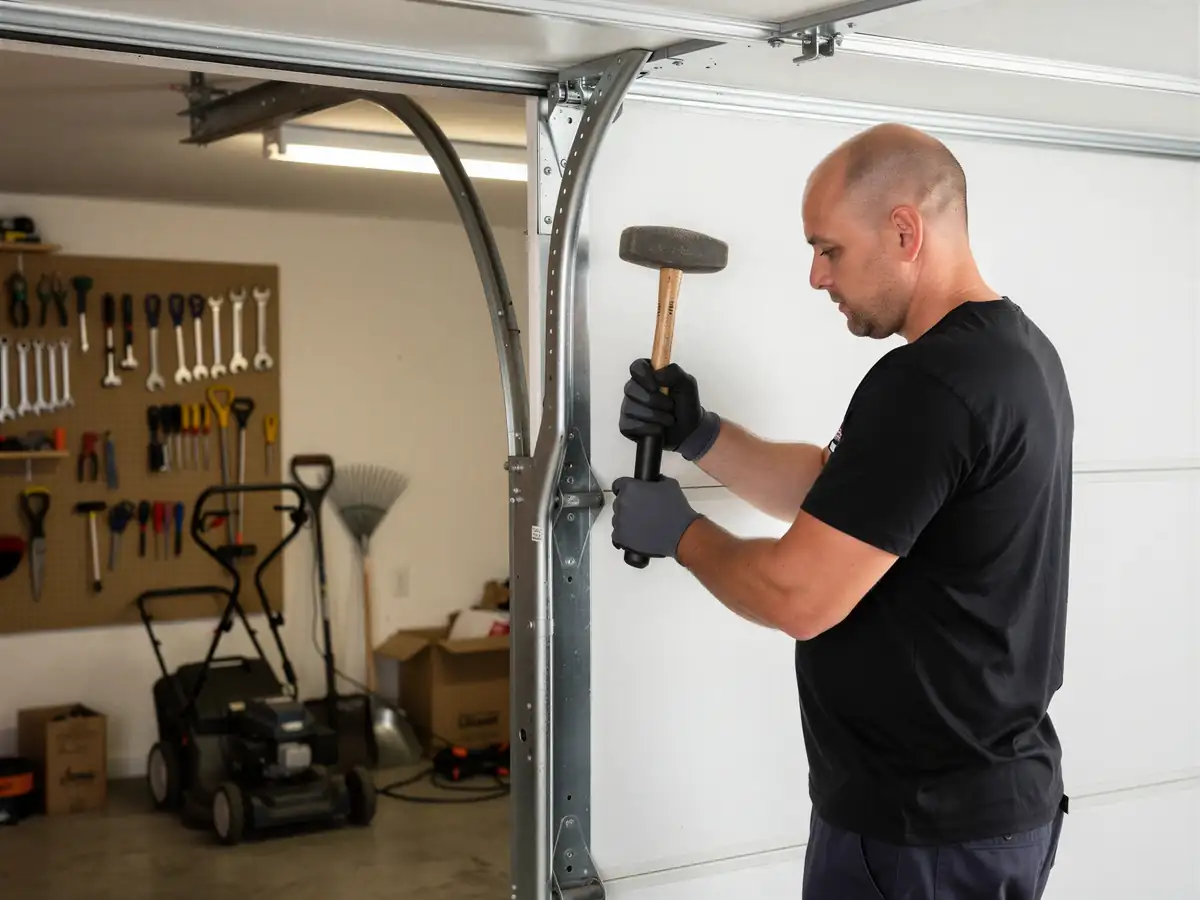
Swapping a single nylon roller on the bottom bracket is a job some homeowners handle themselves - loosen the bracket, slide the old roller out, slide the new one in. Where people get hurt is the rollers near the top section, because that means working close to the spring under tension, and on a door old enough to be original to a 1977-built house, you don't know the spring's condition until you're already in there. If the track is bent, not just the roller worn, replacing the roller alone won't fix the noise or the binding - you're chasing a symptom. We'd rather tell you that up front than have you buy a part that doesn't solve it.
What Causes It Around Here
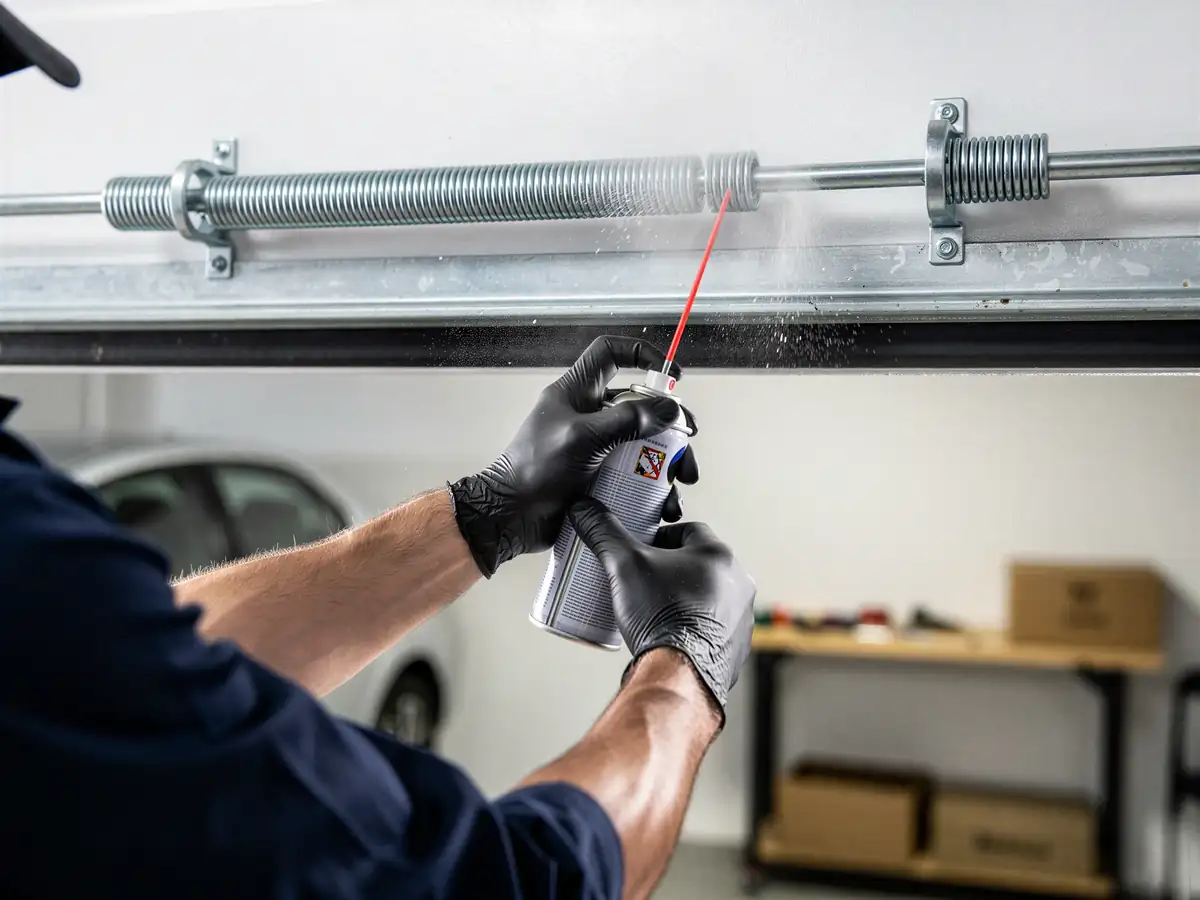
Cold is the main driver. The service area sits in a cold-moderate climate band, and that means grease on steel rollers stiffens up overnight more often than it does somewhere milder - the door drags for the first cycle or two on a cold morning, and that drag is what grooves a roller flat on one side over a few winters. Houses built around 1977, which describes a large share of what's in Blue Ridge, were built before plastic and sealed-bearing rollers were common upgrades, so a lot of what we find is the original steel-on-steel setup, sometimes never relubricated. With roughly 1,179 households out this way, we're not working from a big local sample, but the pattern holds: older steel rollers plus cold swings equals flat spots and noise well before the rest of the door shows its age.